
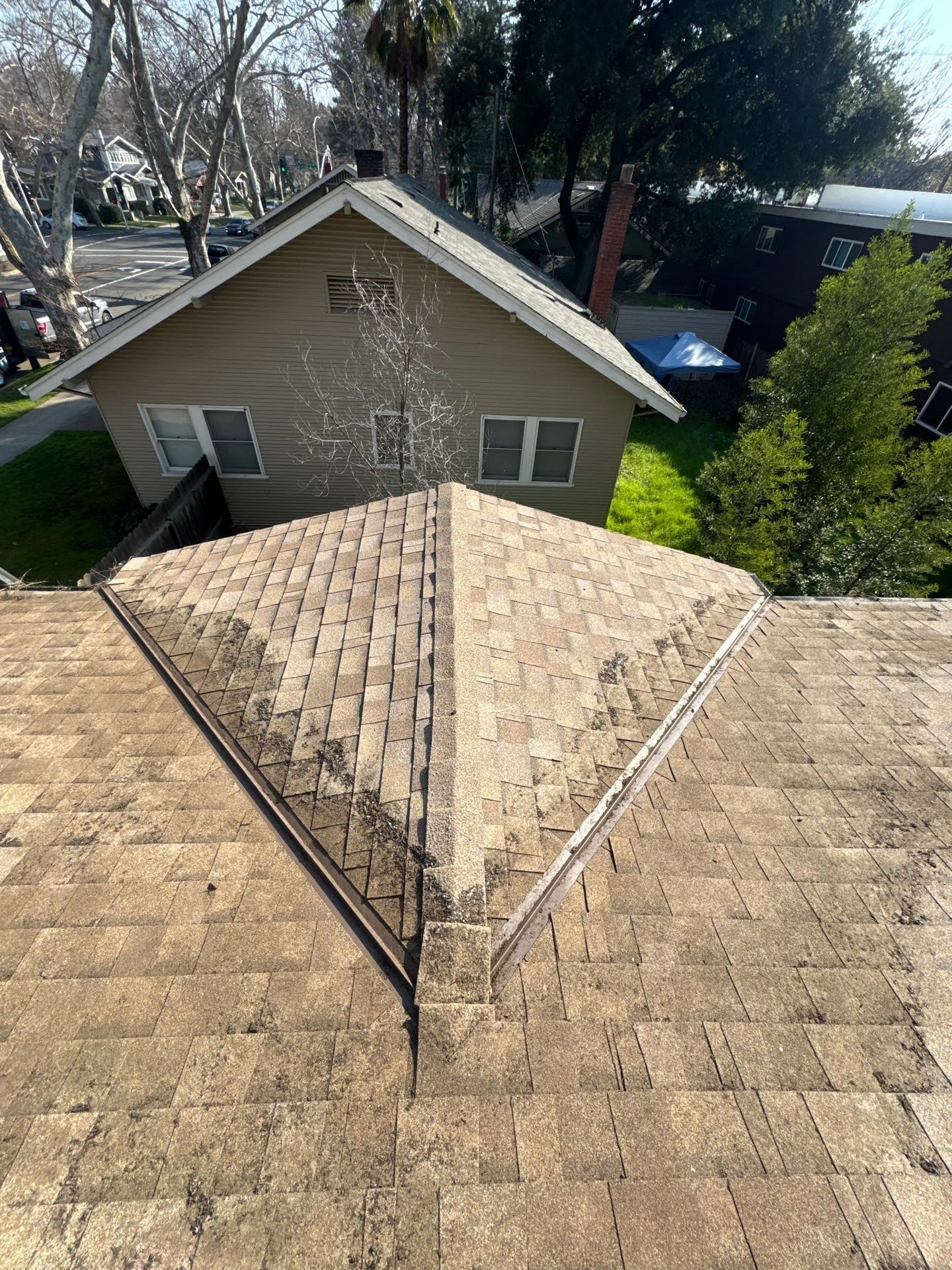
Storm Season
What to Check on Your Roof and Gutters After a Storm Passes
Once it's safe to go outside, here's a practical, ground-level walkthrough of what to look at on your roof, gutters, downspouts, and yard before the next system rolls in.
Every fall, the same thing happens across Sacramento neighborhoods: a truck with a magnetic door sign shows up, someone knocks, and you're offered a same-day gutter cleaning at a price that sounds too good to pass up. Sometimes that's a perfectly fine local operator. Sometimes it's someone who'll take a deposit and never come back, or do the job badly enough that you're calling someone else within a month anyway. The difference is almost never obvious from the doorstep, which is exactly why it's worth knowing how to actually check.
In California, a contractor performing work where labor and materials add up to more than $500 is legally required to hold a license issued by the Contractors State License Board (CSLB). Gutter cleaning on its own sometimes falls under that threshold for a single small job, but gutter repair, guard installation, and seamless gutter work almost always require one.
"Insured" covers two separate things worth knowing apart: general liability insurance, which covers damage to your property during the job, and workers' compensation, which covers an injury to a crew member while they're on your roof. A company can carry one without the other, and the gap matters more than it sounds like it would. The CSLB's own guide to hiring a licensed contractor walks through both pieces in more detail than we can cover here.
A few patterns show up often enough in the complaints we hear about that they're worth naming directly.
| Red flag | What a legitimate company does instead |
|---|---|
| Door-to-door pitch with a same-day, cash-only discount | Scheduled appointment, standard pricing regardless of payment method |
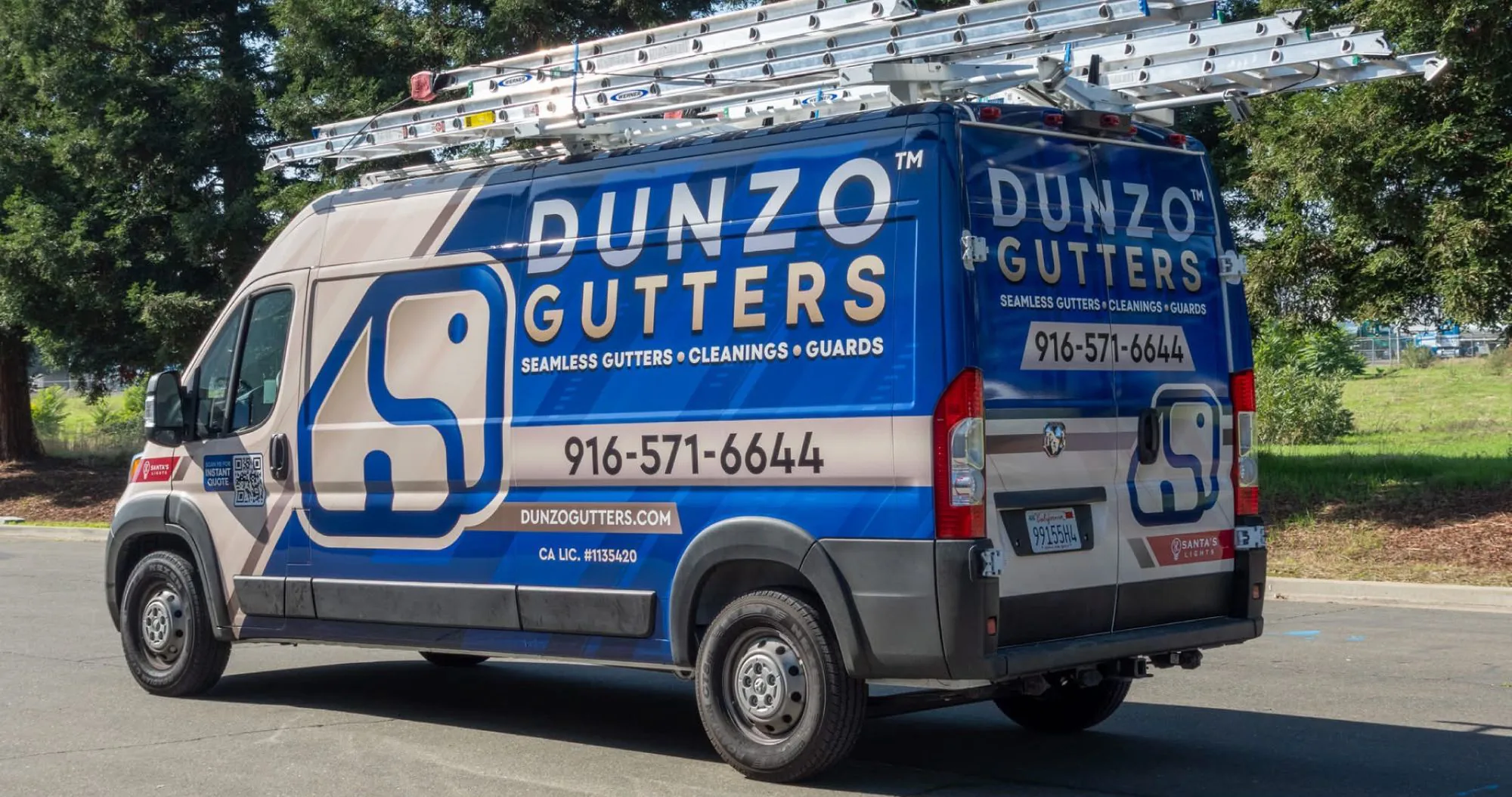
| Can't provide a license number on request | States their CSLB license number upfront, printed on trucks and paperwork |
| Large deposit required before any work starts | Payment due on or after completion, or a small deposit tied to a written agreement |
| Verbal quote only, nothing in writing | A written estimate that itemizes the actual scope of work |
| No local address or phone number that rings a real office | A real, checkable local presence and a number someone actually answers |
| Pressure to sign or decide immediately | Time to think it over, with the quote still honored a few days later |
Want a straightforward comparison?
See what a licensed, itemized quote from us actually looks like.
This takes about a minute and it's the single most reliable step in this whole process. The CSLB's license lookup tool lets you search by license number, business name, or the name on the license, and it will show you the license's current status, its classification, and whether workers' compensation coverage is on file.
A license that shows as expired, suspended, or revoked is an immediate pass, no matter how reasonable the person standing on your porch seems. The tool also shows how long the license has been active, which is a useful gut check on a company claiming years of local experience.
A license number alone doesn't guarantee a crew is covered if something goes wrong. If a worker is injured on your property and the company doesn't carry workers' compensation, that liability can, in some circumstances, fall back on the homeowner. It's worth asking directly, not just assuming it's covered because the company seems established.
The strongest way to confirm it is to ask for a Certificate of Insurance (COI) that names you as an additionally insured party for the duration of the job. A company that hesitates or can't produce one on request is telling you something, even if they never say it out loud.
A short list, but each one tends to separate a legitimate company from one you'll regret hiring.
We'll answer all six before you book, no pressure either way.
A quote that's noticeably lower than everyone else's is usually lower for a reason: a shorter scope of work, no downspout flushing, no debris removal, or simply a company that doesn't carry the insurance a properly priced job accounts for. None of that is visible on the invoice, only in what doesn't get done.
The real cost of a cheap, incomplete cleaning rarely shows up the same week. It shows up months later, which is exactly the slow, compounding problem covered in The Hidden Cost of Ignoring a Clogged Gutter: a downspout that was never actually flushed behaves the same as a gutter that was never cleaned at all.
Two quotes with different numbers aren't always comparing the same job. A few line items worth checking before you decide on price alone.
| Line item | Why it matters |
|---|---|
| Downspout flushing included? | A clean-looking trough with a clogged downspout still overflows in the next storm |
| Debris hauled away or left on-site? | Bagged debris left on your lawn is a hidden cost of the "cheaper" option |
| Photo report provided? | Documentation of what was actually done, useful if a dispute comes up later |
| Repairs flagged during the visit? | A crew that's only looking for the invoice total tends to miss early warning signs |
| Pricing based on your actual home or a flat rate? | A flat rate regardless of size or access is a sign of a rushed, generic process |

It's a scheduled appointment, not a cold knock. It's a license number you can verify in under a minute, not one you have to ask for twice. It's a written, itemized quote before anyone touches a ladder, and a local office and phone number that's still there if you call back next year with a question.
None of that is complicated, but it's exactly what separates a company you'll use again from one you'll be Googling complaints about in six months.
Local, licensed, and happy to prove it
Verify our CSLB license yourself, then get a firm, written quote.
Run through this before any money or a ladder is involved.
If you paid a deposit and the company stopped responding, or the work was done badly by an unlicensed crew, the CSLB accepts complaints against licensed contractors, and local consumer protection resources can help with unlicensed ones. It's also worth checking your own homeowners insurance and, if a significant deposit was involved, your local small claims court, which has a filing limit well-suited to this kind of dispute.
Going forward, a bad experience with one company isn't a reason to avoid hiring out gutter work entirely, it's a reason to use the checklist above the next time around.
Questions homeowners ask us most often while they're still comparing quotes.
Storm Season
Once it's safe to go outside, here's a practical, ground-level walkthrough of what to look at on your roof, gutters, downspouts, and yard before the next system rolls in.
Storm Season
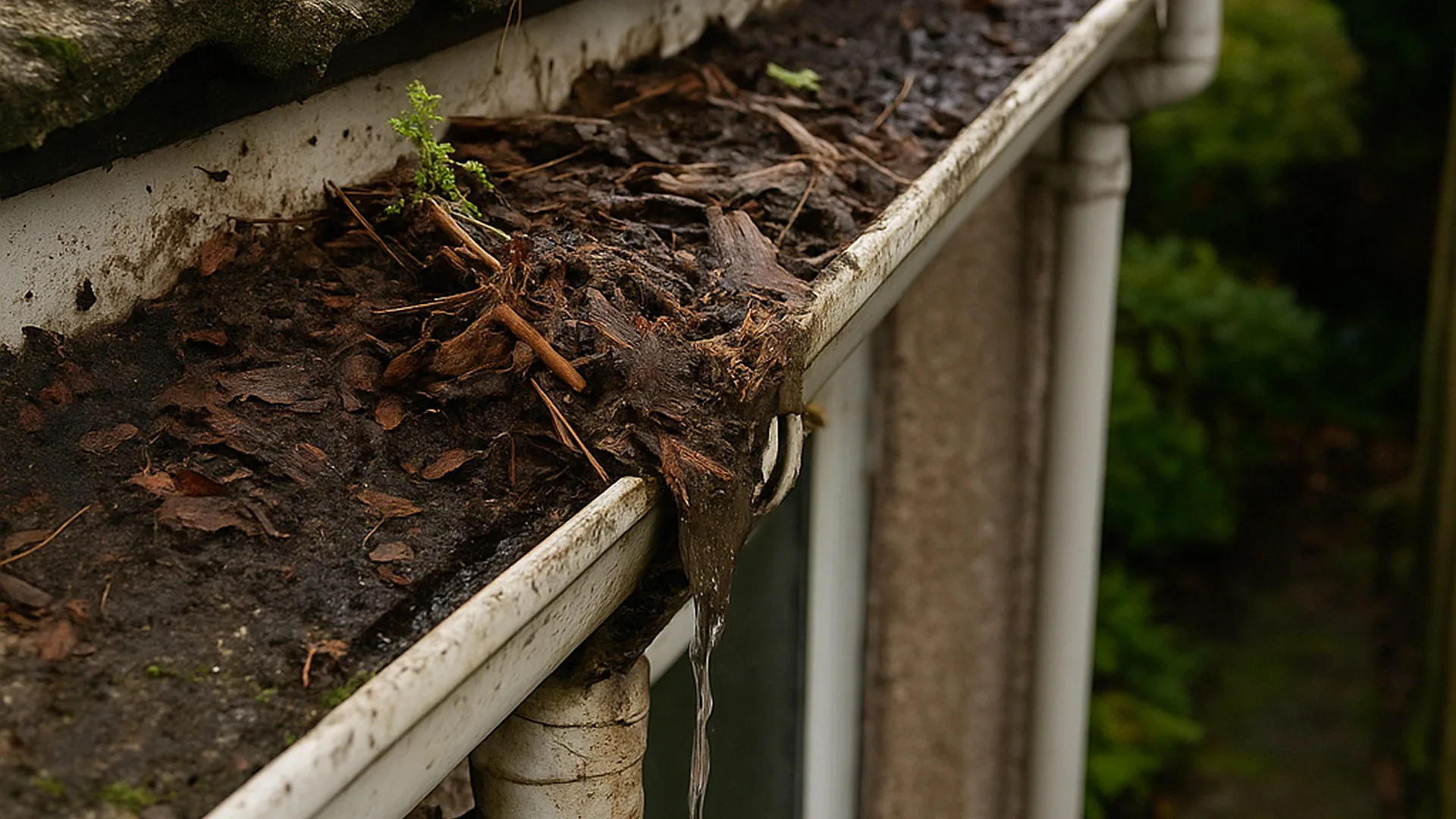
If water is sheeting over your gutters mid-storm, here's the honest, safety-first version of what to do, what to watch, and when it's a real problem versus just a mess.
Seasonal
Most holiday light guides assume a bare gutter with nothing else going on. Here's what actually changes if you have gutter guards, seamless gutters, or a system that's already due for a cleaning.
Free inspection, firm price