
Gutter Maintenance
What a Gutter Inspection Catches That Cleaning Alone Doesn't
A cleaning clears leaves and debris. An inspection checks whether the gutter itself is still sound. Here's what gets missed when you only ever book one of the two.
Once the wind dies down and the rain tapers off, it's worth spending fifteen minutes walking your property before you decide everything's fine. Storms shift debris, loosen hardware, and expose weak points that were invisible a week earlier, and catching them now is a lot cheaper than catching them after the next storm makes them worse. If you were dealing with active overflow during the storm itself, start with our companion piece on what actually helps while gutters are overflowing. This one picks up right where that leaves off: the walkthrough once it's safe to be outside again, and when it's time to stop DIYing it and get a professional set of eyes on things.
Before you look up, look around. A fast storm can bring down branches, loosen power lines, and leave standing water that hides hazards. The Red Cross's guidance on returning home safely after a storm is written for bigger disasters, but the basic habits apply here too: look before you walk, and don't touch anything electrical that's wet or down.
Storm debris you're not comfortable clearing yourself?
If there's anything on the ground or against the house you'd rather not touch, we'll handle the cleanup safely.
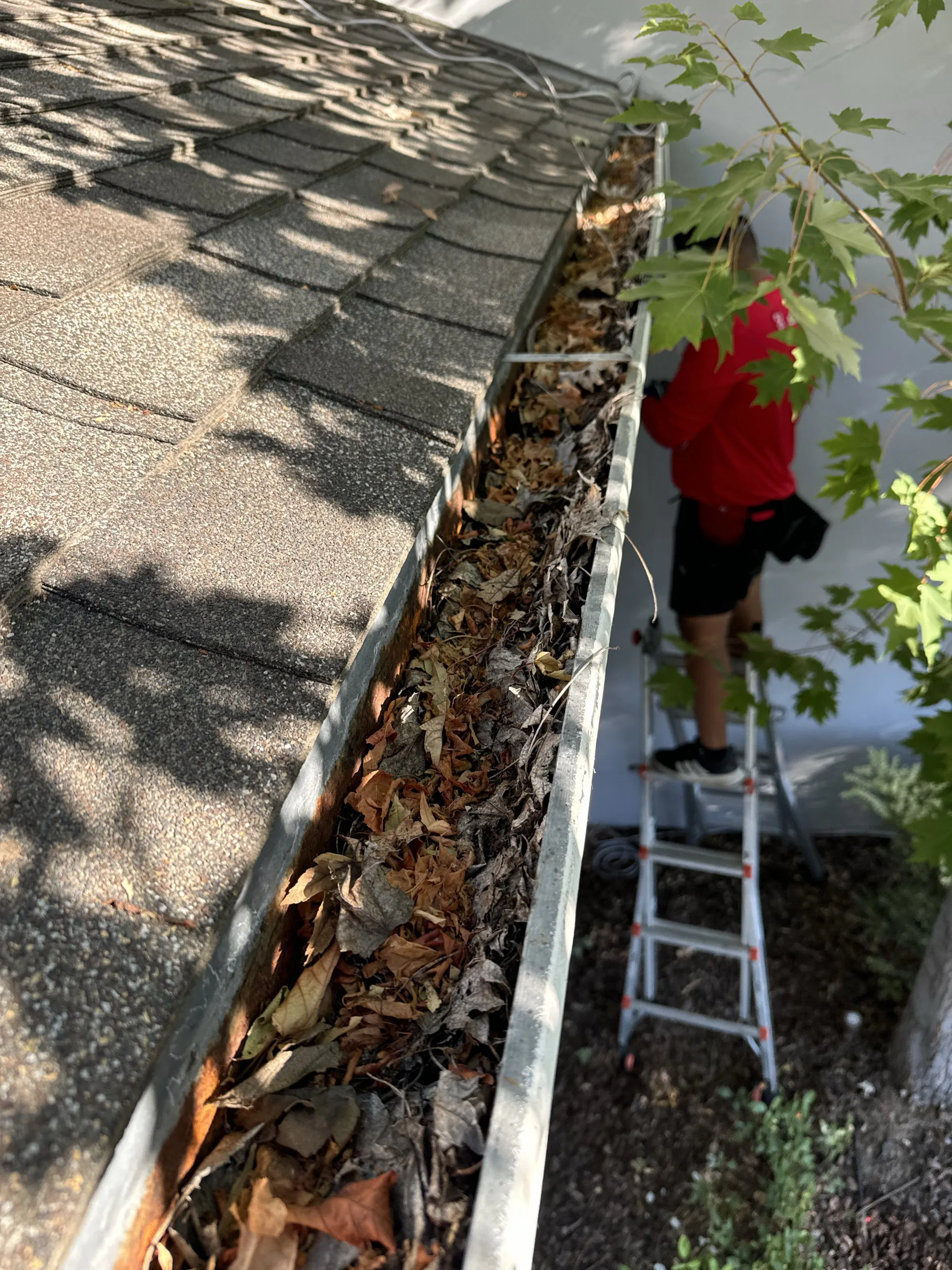
This is the easiest and most valuable part of the walkthrough, and you can do almost all of it from the ground. It's also the part most likely to turn into a bigger bill if you let it sit through a second storm.
Spot debris you can't safely clear yourself?
A post-storm gutter cleaning catches what the wind just dumped on your roof before it compacts and sits there until next season.
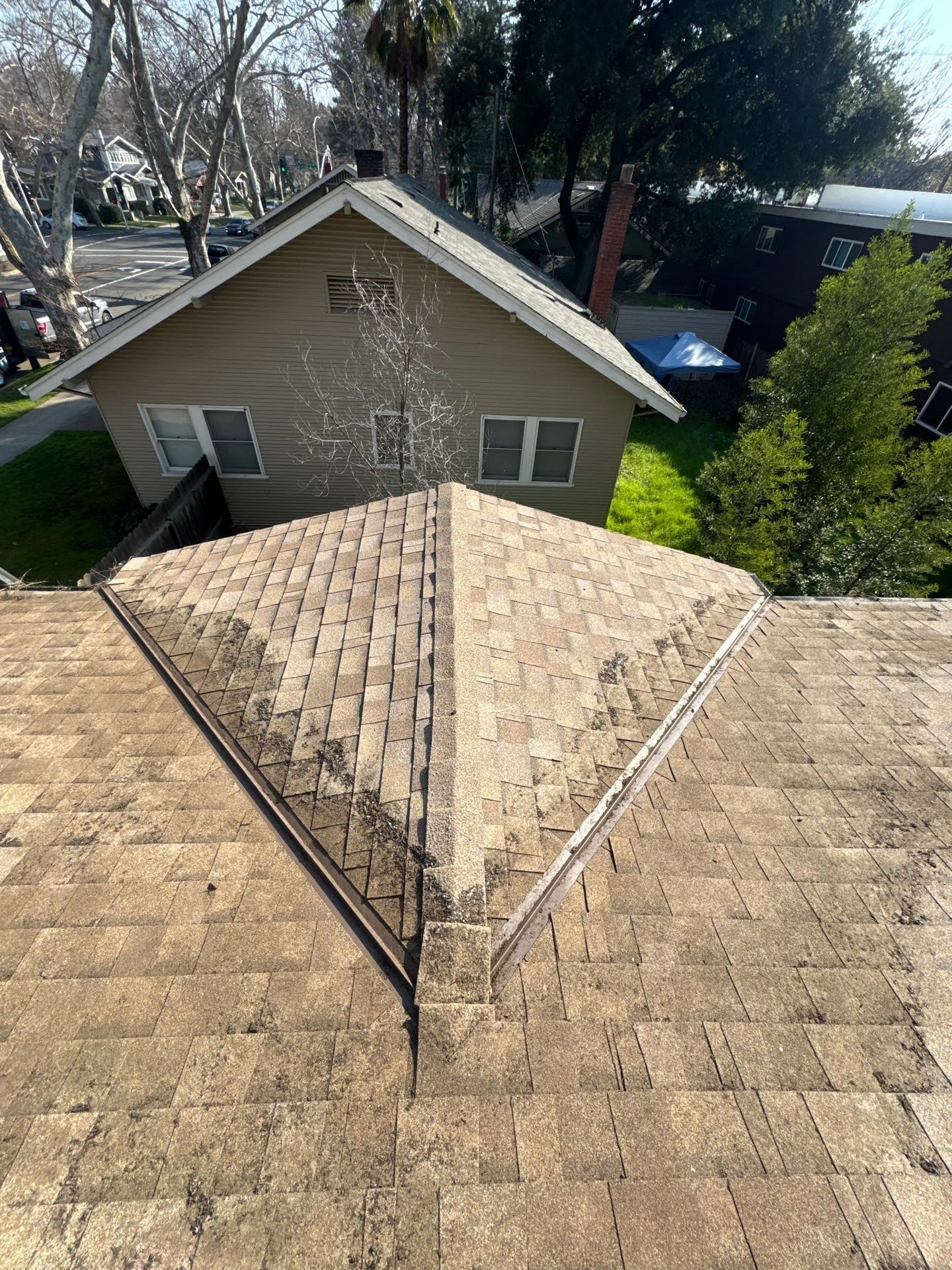
A pair of binoculars from the yard tells you most of what you need to know without any ladder risk. You're looking for anything out of place, not trying to do a full inspection yourself, and anything you spot here is worth having a professional confirm before the next system rolls in.
| What you see | What it likely means | How urgent |
|---|---|---|
| Missing, cracked, or curled shingles, or displaced tiles | Wind lifted or shifted roofing material | Get it checked before the next rain, not after |
| Dents or damage around vent pipes, flashing, or the chimney | A common spot for leaks to start after wind damage | Worth a professional look soon |
| Piles of debris sitting in roof valleys | Leaves and small branches collecting moisture | Can wait for a scheduled cleaning if it's dry |
| Obvious sag in the roofline | Rare, but can mean structural trouble underneath | Call a professional immediately |
| Granules collecting in gutters or on the ground | Asphalt shingles taking a beating in wind or hail | Worth mentioning at your next roof check |
Not sure what you saw through the binoculars?
Send us what you noticed and we'll tell you whether it's a wait-and-see or a get-it-looked-at-now situation.
Water tells you exactly where your drainage is working and where it isn't, but only in the first day or two after a storm while the ground is still saturated.
| What you see | What it likely means |
|---|---|
| Water still pooling 24+ hours after rain stops | Poor grading or a downspout discharging too close to the house |
| Soggy or sinking soil right next to the foundation | Downspout runoff concentrating in one spot instead of spreading out |
| Mulch or soil washed away from one specific area | A gutter overflow point directly above that section |
| Water marks on a fence, shed wall, or side yard | Runoff that's finding an unintended path around the house |
Gutters pulling away or leaking at the seams?
That's a hardware and sealant issue, not something a cleaning fixes. Worth getting assessed before it gets worse.
A storm's effects don't always show up outside first. Walk the interior too, especially rooms directly under the roofline or near exterior walls where gutters overflowed.
Found a water stain that wasn't there before?
Interior staining almost always traces back to something outside. We'll find the source instead of guessing.
Clearing a splash block or picking up yard debris is fine to handle yourself. Anything involving a ladder, the roof itself, or hardware pulling away from the house is where it's worth bringing in someone who does this for a living. It's also the right time to get ahead of the rest of the season. Our guide to prepping for the first winter storm is worth revisiting now that you've seen firsthand where this storm found the weak points.
Want an expert set of eyes on it?
We'll check the gutters, downspouts, and roofline together and give you a straight answer on what, if anything, needs attention before the next storm.
Here's what Sacramento area homeowners ask us most once a storm has passed and it's time to assess the damage.
Gutter Maintenance
A cleaning clears leaves and debris. An inspection checks whether the gutter itself is still sound. Here's what gets missed when you only ever book one of the two.
Gutter Maintenance
A downspout extension costs about $30 and takes twenty minutes to install, but most Sacramento homes still dump roof water right at the foundation. Here's why that matters and how to fix it.
Storm Season
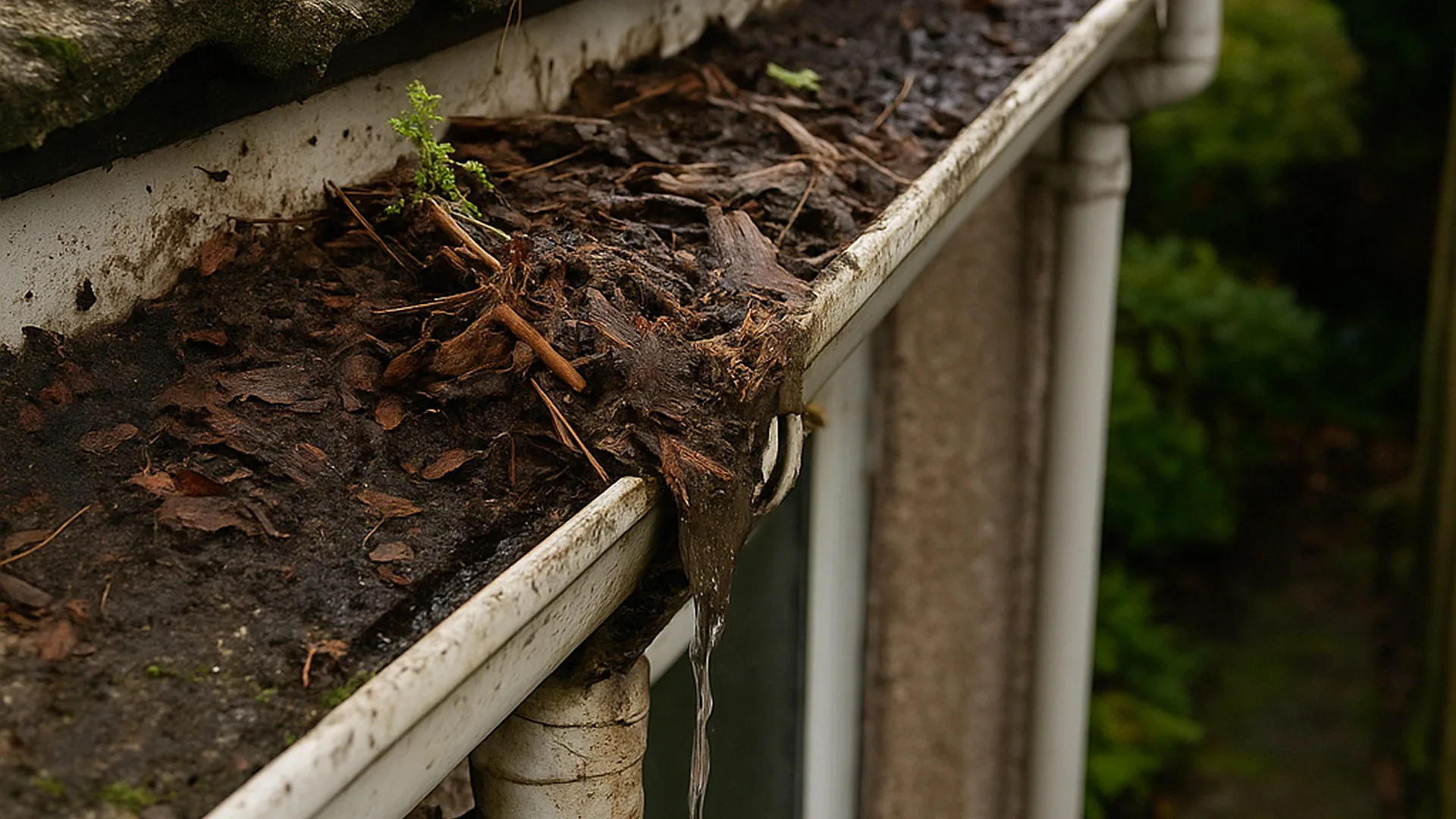
If water is sheeting over your gutters mid-storm, here's the honest, safety-first version of what to do, what to watch, and when it's a real problem versus just a mess.
Free inspection, firm price