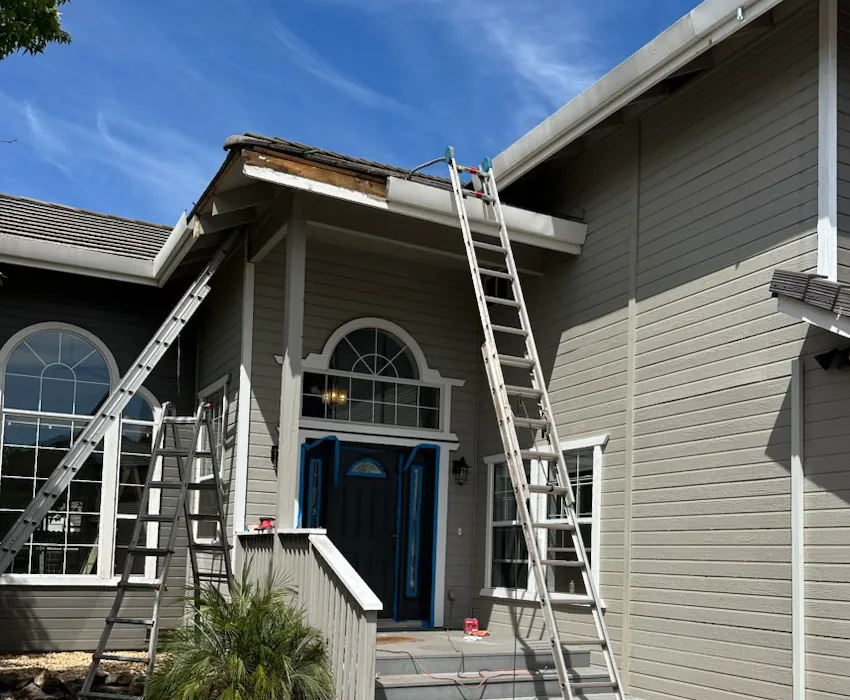
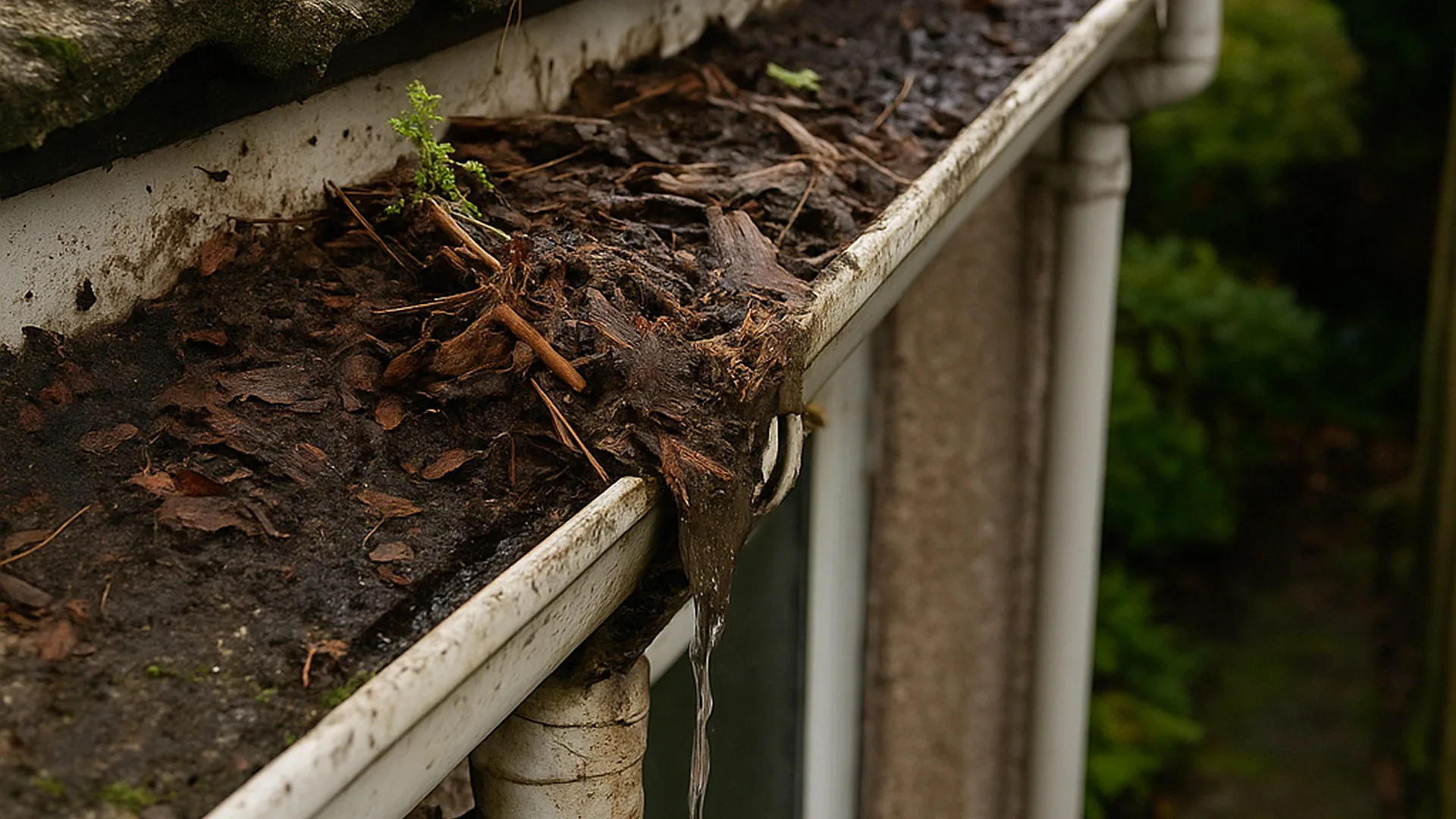
Any one of the fascia signs above means water has been getting behind the gutter for a while, usually from a seam that let go or a hanger that's been pulling slightly loose for months. Left alone, soft fascia eventually can't hold a hanger at all, and at that point you're not looking at a repair, you're looking at , which averages $1,181 once a sectional, aging system finally gives out. Catching it while it's still a small fascia repair is a lot cheaper than catching it after.
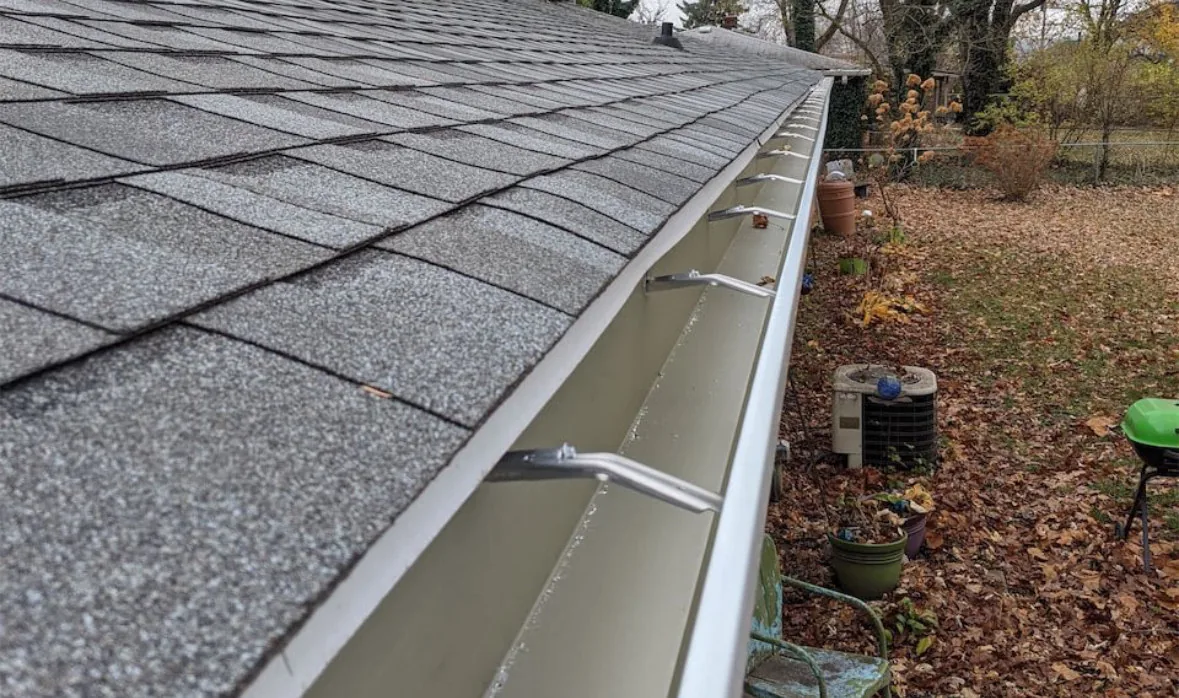
Sectional gutters are joined at seams, and those seams are usually sealed with caulk or a gasket that doesn't last forever. Standing water sitting at a low point puts constant pressure on that seal, and over a season or two it can separate just enough to drip. From the ground, a slow seam leak usually just looks like a damp streak on the siding below, easy to blame on sprinklers or write off entirely until it's been running long enough to leave a stain. Slope is the other thing that's hard to judge without actually checking it. A gutter should pitch slightly toward its downspout, roughly a quarter inch of drop for every 10 feet of run, so water moves instead of sitting.
|
| Damp streak on siding below a seam | Seal has failed and water is dripping between sections | Siding and trim rot the longer it's ignored |
| Water sitting in the channel between rains | Lost slope, usually from a nearby hanger failure | Added weight speeds up the next hanger failure |
| Standing water or mosquitoes near the gutter | Water with nowhere to drain | A breeding spot right at your roofline |
| Rust forming at a low point in the run | Water sitting instead of draining through | Rust-through holes and a shortened gutter lifespan |