
Gutter Maintenance
What a Gutter Inspection Catches That Cleaning Alone Doesn't
A cleaning clears leaves and debris. An inspection checks whether the gutter itself is still sound. Here's what gets missed when you only ever book one of the two.
Walk around most Sacramento area homes and you'll find the same thing at the bottom of nearly every downspout: a short elbow that dumps water two feet from the house, right next to the foundation, every single time it rains. It's one of the most overlooked gaps in an otherwise fine gutter system, and it's also one of the cheapest to close. A downspout extension runs about $30 at any hardware store and takes less than twenty minutes to install, yet most homes in Sacramento, Elk Grove, Roseville, and Folsom still don't have one.
This isn't a minor cosmetic fix. Water dumped at the base of a house, over and over, through our wet winters and the occasional atmospheric river event, is one of the most common and most preventable contributors to foundation problems in this region. It's also one of the few gutter fixes we'll tell you flat out to do yourself. You don't need a ladder, a license, or a call to us for this specific piece, though it's worth having the rest of your system checked while you're at it.
Sacramento Valley soil is heavy in clay, and clay does something frustrating when it gets wet: it swells. When it dries back out, it shrinks and cracks. Run that cycle over and over, right against your foundation wall, and you get exactly the kind of movement that cracks slabs, pushes on foundation walls, and opens gaps that let water into crawl spaces. A downspout that empties two feet from the house keeps that soil saturated in the exact spot you don't want it.
We've written before about the hidden cost of ignoring a clogged gutter, and foundation and water damage repair from long-neglected gutter problems averages around $8,000 once it's actually happened. A downspout extension is a tiny piece of that prevention puzzle, but it's a real one. Moving the discharge point just four to six feet further out gives water room to spread into soil that isn't constantly pressed against your house, and it gives it a chance to drain or evaporate before it ever gets near the foundation. If you're already worried about what years of saturated soil might have done, that's worth a second set of eyes.
Worried about what years of saturated soil might have done?
A quick drainage check tells you whether it's cosmetic or something that needs attention now.
A gutter system's whole job is to collect roof water and get it down to the ground in a controlled way. The downspout handles the vertical drop. The extension handles the last, most important few feet: getting that water away from the house instead of letting it pool at the base of the wall. This Old House covers the basic mechanics well in its guide on how to extend a downspout, and the core advice lines up with what we see on roofs across the Sacramento area: get the discharge point at least four to six feet from the foundation, more if your yard has heavy clay soil or sits on a slope that drains back toward the house.
There are a handful of ways to do this, and which one makes sense depends on your yard more than your budget. None of them require tools beyond a screwdriver, a tape measure, and maybe a hacksaw. If you'd rather have it done right the first time instead of guessing which style fits your yard, that's something we handle during a regular visit too.
| Type | Typical cost | Best for | Watch for |
|---|---|---|---|
| Rigid aluminum elbow and extension | $10 to $20 | Flat yards, side yards, a permanent setup | Can be a trip hazard if left flat on a walkway |
| Flexible corrugated extension | $10 to $15 | Uneven ground, tight side yards | Kinks easily; lay it with a steady downhill slope or it backs up |
| Roll-out or flip-up extension | $25 to $40 | Lawns that get mowed regularly | The spring hinge wears out after a few seasons of use |
| Buried drain line to daylight or a dry well | $300 to $1,000+ | Homes with serious grading issues or a foundation history | Needs correct slope and occasional inspection for root clogs |
Not sure which type fits your yard?
We'll match the extension style to your grading and gutters so it actually works instead of becoming a trip hazard.
This is genuinely one of the easier DIY jobs tied to your gutter system. Here's the short version, and if you'd rather skip straight to having it done, we can fold it into any other visit at no extra trip.
Not sure your drainage is set up right?
If you're not sure your gutters and downspouts are actually moving water where it needs to go, we'll take a look and tell you straight.
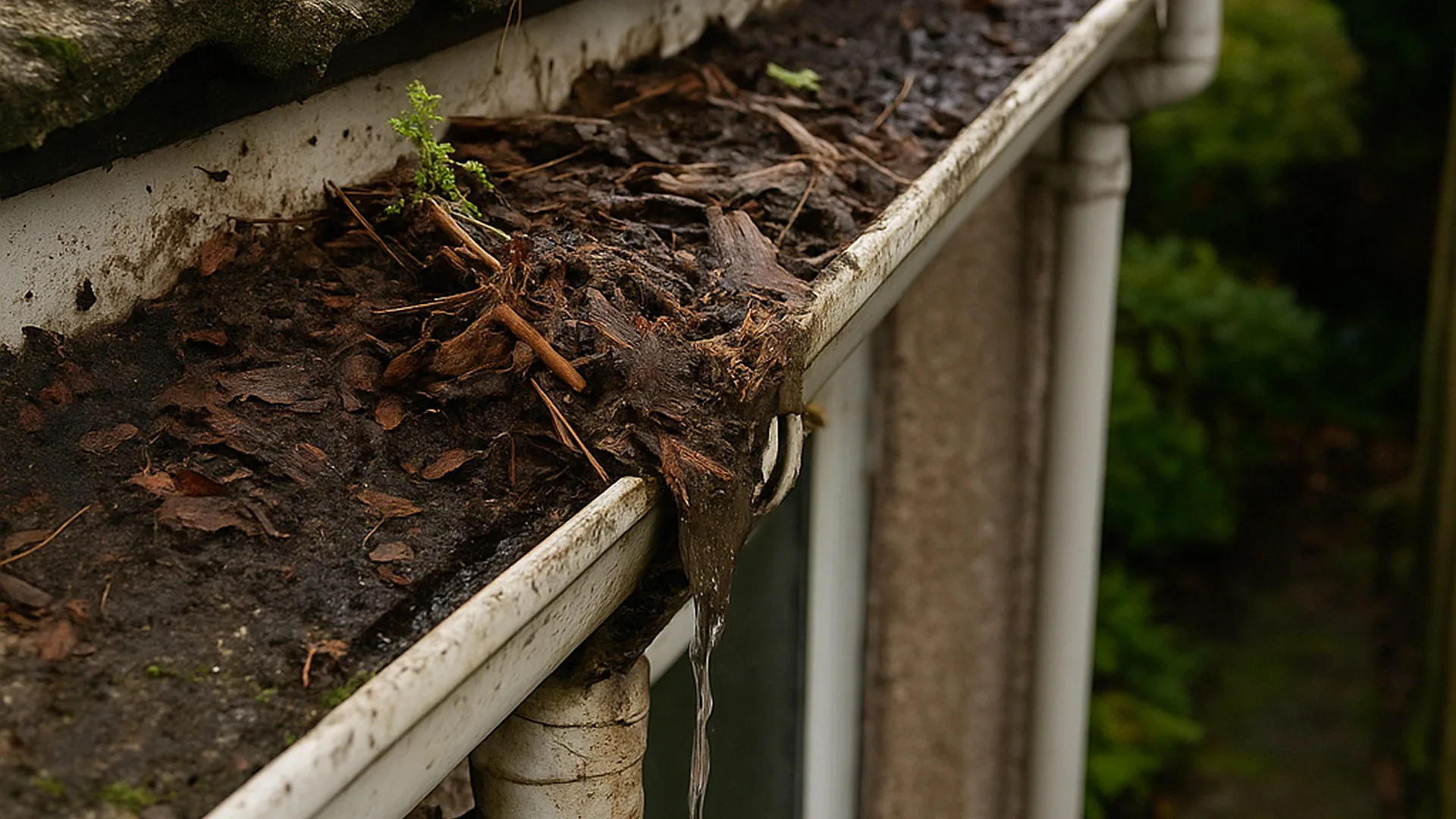
A downspout extension only works if water actually reaches the downspout in the first place. A handful of upstream problems make the $30 fix pointless until they're addressed, and they're worth ruling out before you assume the extension alone solved anything.
If your home has one of these underlying issues and you're not sure which one, that's exactly what a walkthrough is for. Our guide on gutter repair or full replacement walks through how to tell a minor fix from one that calls for a new system, and a full gutter replacement averages $1,181 when sectional, aging gutters finally give out.
| Underlying issue | Why the extension alone won't fix it | What actually fixes it |
|---|---|---|
| Gutters clogged with leaves and debris | Water overflows the edge before it ever reaches the downspout | A gutter cleaning, not a new extension |
| Crimped, undersized, or partially blocked downspout | The pipe itself can't move enough water during a heavy storm | Downspout repair or an upsized replacement |
| Buried drain line with root intrusion or sediment | A surface extension can't fix a clogged line underground | A drain line inspection and clean-out |
| Yard grading that slopes back toward the house | The extension just moves the puddle a few feet further out | Regrading or a proper drainage solution |
| Sagging, rusted, or pulled away gutter section | Water never makes it to the downspout in the first place | Gutter repair or full replacement |
Gutters clogged before water even reaches the downspout?
If water's overflowing the edge, the fix is upstream, not a new extension. We'll diagnose it and give you options, not just a sales pitch.
Older neighborhoods around the city add another wrinkle. Many homes route their downspouts into a buried drain line rather than discharging above ground, and those older underground lines are a common spot for root intrusion and sediment buildup to quietly choke off drainage years before anyone notices water is backing up somewhere it shouldn't. If your home has one of these buried lines and you're not sure when it was last checked, that's worth asking about specifically, since a surface extension can't fix a clogged line underground.
Not sure when your buried line was last checked?
We'll help you figure out whether it's doing its job or quietly backing up underground.
Downspout extensions are cheap insurance, but they're most valuable before the rainy season actually arrives, not after you've already got standing water against the foundation. If you haven't walked your property and checked every downspout outlet yet this year, now's the time. Our guide on getting ready for the first winter storm covers the rest of the pre-storm checklist, from clearing gutters to checking hangers, so an extension isn't the only thing doing the work.
None of this replaces a clean gutter system. An extension manages the water that makes it to the ground. Everything upstream, the gutters, the hangers, the downspout itself, still needs to be in working order for that water to get there in the first place. That's the piece most DIY fixes skip, and it's the piece worth having a professional confirm at least once a year.
Want the whole system checked before the next storm rolls in, not just the downspouts?
Here's what Sacramento area homeowners ask us most about downspout extensions and when the $30 fix needs backup.
Gutter Maintenance
A cleaning clears leaves and debris. An inspection checks whether the gutter itself is still sound. Here's what gets missed when you only ever book one of the two.
Storm Season
Once it's safe to go outside, here's a practical, ground-level walkthrough of what to look at on your roof, gutters, downspouts, and yard before the next system rolls in.
Storm Season
If water is sheeting over your gutters mid-storm, here's the honest, safety-first version of what to do, what to watch, and when it's a real problem versus just a mess.
Free inspection, firm price