
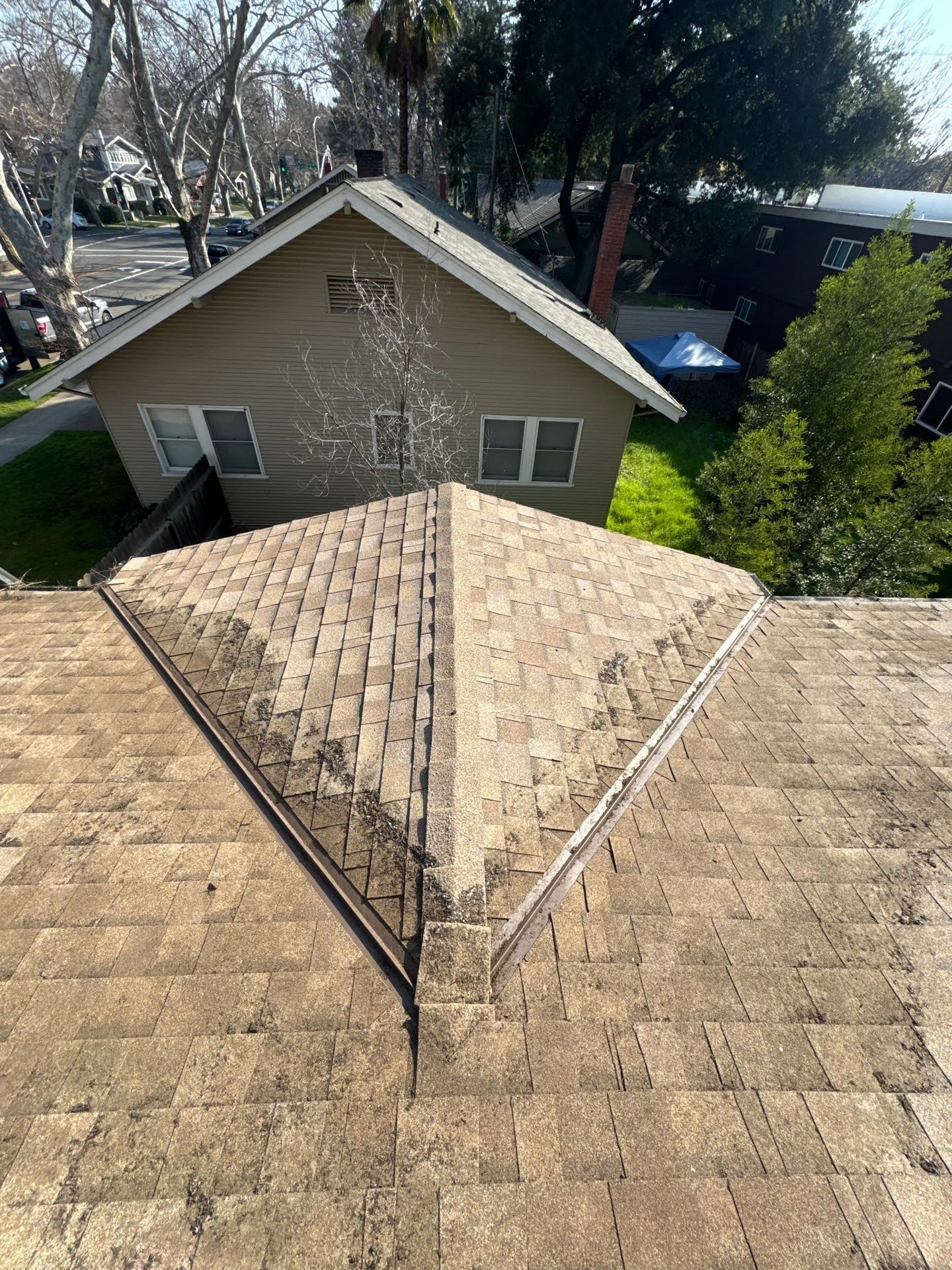
Storm Season
What to Check on Your Roof and Gutters After a Storm Passes
Once it's safe to go outside, here's a practical, ground-level walkthrough of what to look at on your roof, gutters, downspouts, and yard before the next system rolls in.
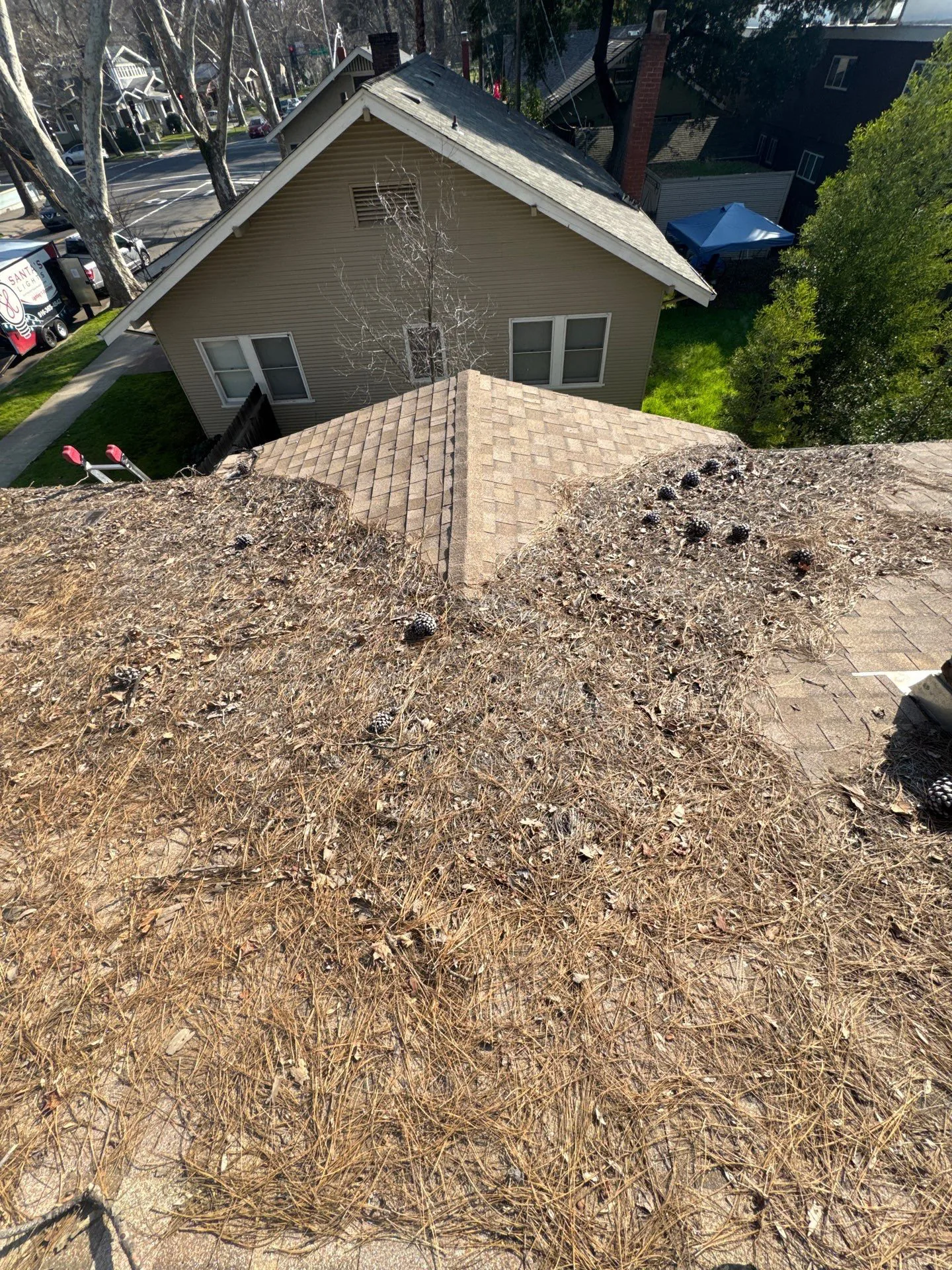
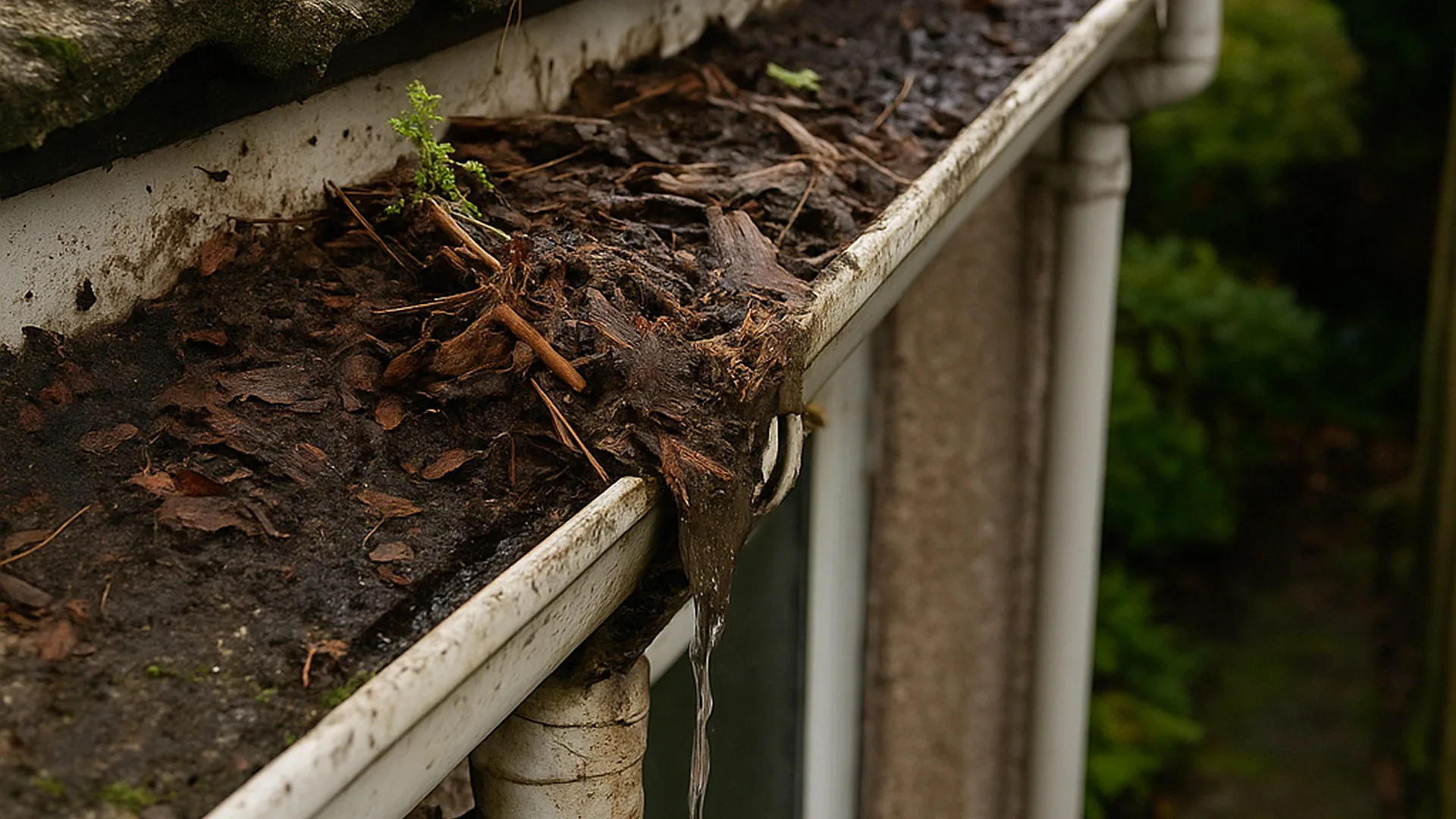
A clogged gutter can't do its one job: moving water away from your roofline and foundation. Instead, water backs up, overflows the edge, and starts running down siding, behind fascia boards, and straight down next to your foundation. That failure mode is exactly what gets tested hardest during a strong atmospheric river, when a clog that was a minor inconvenience in light rain suddenly has to handle far more volume than it was ever going to pass.
According to the Insurance Information Institute, water damage and freezing accounted for roughly 22.6% of homeowners insurance claims in recent years, the second-leading cause behind wind and hail. A meaningful share of that traces back to exactly this kind of slow, preventable overflow rather than a single dramatic storm event.
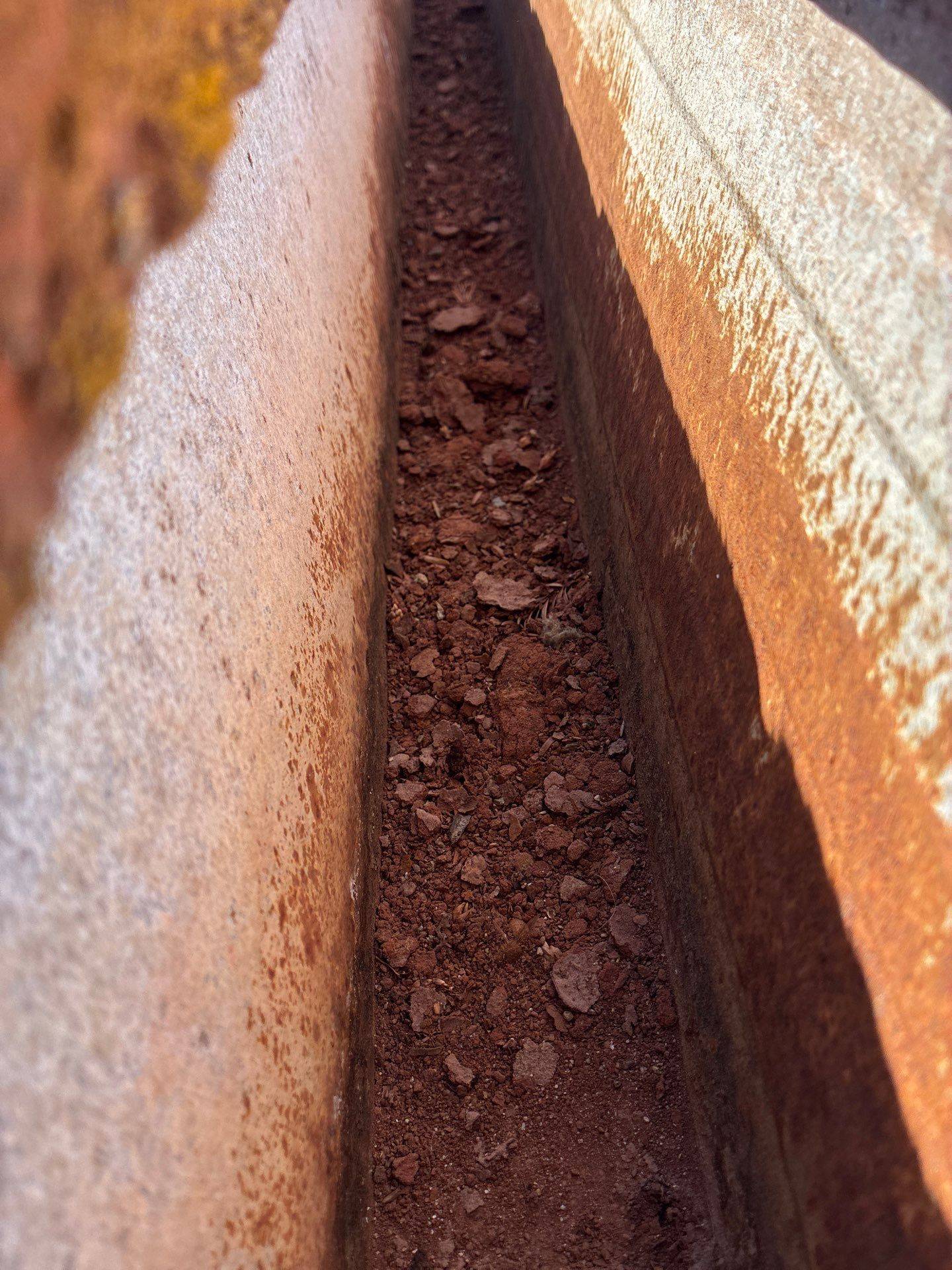
A gutter packed with wet leaves and debris can weigh over 400 pounds per run. That's a lot of extra load on hangers and fascia boards that were never designed to carry it, and it's a common reason gutters start sagging or pulling away entirely.
That sagging isn't just cosmetic. Once a hanger fails, the whole section can come down, sometimes taking a piece of fascia with it, turning a maintenance problem into a repair bill.
The path from a clogged gutter to a real repair bill usually follows the same general sequence.
| Timeframe | What's happening | Cost if caught here |
|---|---|---|
| Week 1 to 4 | Gutter clogs, minor overflow during rain | Cost of a standard cleaning |
| Month 1 to 3 | Repeated overflow saturates fascia and siding | Cost of a targeted repair |
| Month 3 to 12 | Fascia rot spreads, hangers begin failing | Cost of fascia replacement plus gutter repair |
| Year 1+ | Water reaches the foundation line repeatedly | Foundation repair costs averaging around $8,000 |
Catch it in week 1, not year 1
A routine cleaning now is the cheapest line in this whole table.
The table above shows the timeline, but it's worth understanding why each stage leads to the next, since that's what makes early intervention so much cheaper than late intervention.
In the first few weeks, overflow is mostly a nuisance: water spills over the edge during moderate rain but the surrounding materials haven't had time to absorb much of it. By month one to three, repeated soaking starts to saturate the wood fascia board behind the gutter, which is the structural element the whole gutter system is fastened to. Saturated wood softens, and softened wood holds fasteners far less securely.
From month three onward, that softened fascia starts to actively rot, which is when hangers begin pulling loose, not because the hangers themselves failed, but because the wood holding them gave way. Past the one-year mark, if the overflow has consistently been landing near the foundation, repeated saturation cycles can lead to soil movement that stresses the foundation itself, which is the most expensive stage to repair by a wide margin.
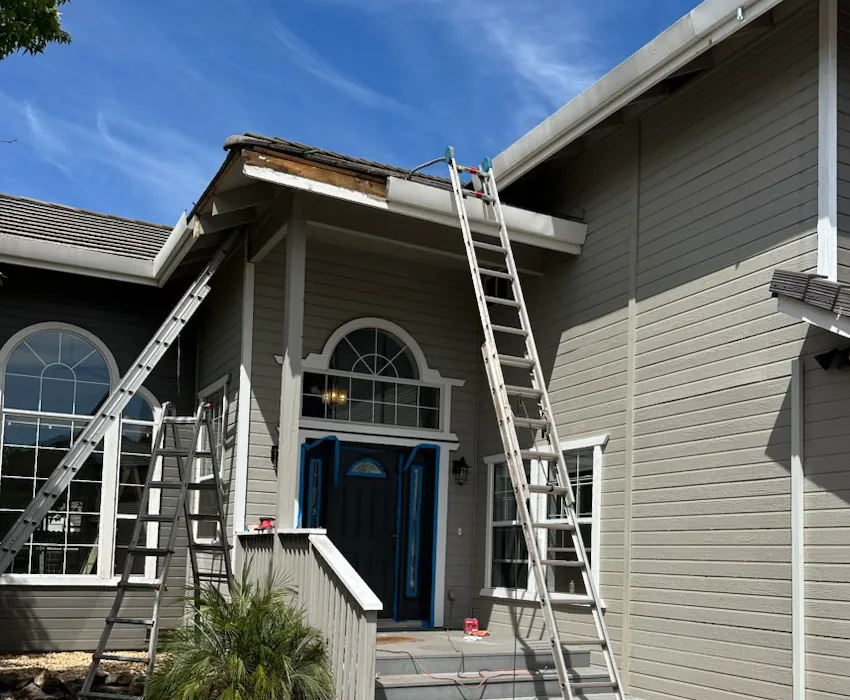
Left long enough, this cycle leads to the kind of damage that's expensive to fix: rotted fascia, damaged siding, and in the worst cases, water intrusion at the foundation that costs an average of $8,000 to repair.
Compare that to the cost of a routine cleaning, and it's not close. A clogged gutter is one of the cheapest problems in your house to fix, right up until it isn't. For a deeper look at how to tell when a system has crossed from "needs cleaning" into "needs repair," see 5 Warning Signs Your Gutters Are About to Fail.
A few of the specific problems that show up once overflow has been happening for a while. The EPA's guidance on moisture and mold specifically names gutters and downspouts that direct water into or under a building as a common driver of the kind of hidden moisture problem behind several of these.
Noticing any of this already? Get a free inspection to see how far it's gone.
Not every clogged gutter leads to foundation exposure, and downspout placement is a big part of why. A downspout that discharges onto a splash block angled away from the house, or into a drain line that carries water well clear of the foundation, limits how much damage a period of overflow can do even before the clog is fixed.
A downspout that empties directly against the foundation, or worse, into a planting bed built up against the wall, turns every overflow event into direct foundation exposure. If you're not sure which category your downspouts fall into, it's worth a quick look the next time it rains, or asking about it during an inspection.
This is one of the most common questions once homeowners connect a repair bill back to a gutter that sat clogged too long, and the answer is usually disappointing. Insurers generally distinguish between sudden, accidental damage (covered) and gradual damage from deferred maintenance (typically not covered).
A gutter that overflows chronically over months or years because it was never cleaned falls squarely into the second category in most policies. That's a big part of why prevention is worth taking seriously: it's not just the cheaper option, in many cases it's the only option that doesn't come with a claims fight attached.
A routine cleaning costs a fraction of a single fascia repair, and a fascia repair costs a fraction of a foundation repair. Every step this problem is allowed to progress multiplies the eventual bill, which is the entire argument for staying ahead of it rather than waiting for a visible symptom.
If it's been a while since your last cleaning, our gutter cleaning page has current pricing, or you can jump straight to a free inspection to find out exactly where your system stands today.
Part of what makes a clogged gutter such an effective source of hidden cost is that the damage happens in places homeowners rarely look. Fascia boards sit above eye level, tucked behind the gutter itself. Foundation saturation happens below grade, hidden by soil and landscaping. Neither announces itself the way a burst pipe or a visibly leaking roof would.
By the time a problem in either location becomes visible, whether that's a sagging gutter section or a crack in an interior wall, it's usually been developing for months already. That lag between cause and visible effect is exactly why a scheduled cleaning, done on a calendar rather than in response to a visible symptom, is worth more than its sticker price suggests.
Consider a typical two-story home with moderate oak cover that skips its fall cleaning one year. The gutters partially clog heading into the rainy season. Overflow starts during the heavier storms, though it's easy to miss since it happens at night or while no one's watching the roofline.
By spring, the fascia board below the worst section has absorbed several months of intermittent soaking. It's softening, though not yet visibly sagging. If the next fall cleaning is skipped too, that softened fascia has another wet season to deteriorate further, and the hangers attached to it start to loosen as the wood around them gives way. This is the point where what started as a simple missed cleaning has become a repair involving both the gutter hardware and the fascia board itself, a noticeably larger job than the cleaning that would have prevented it two years earlier.
Don't let your home become this example. Get ahead of it today.
Questions homeowners ask once they've connected a repair bill back to a gutter that sat clogged too long.
Storm Season
Once it's safe to go outside, here's a practical, ground-level walkthrough of what to look at on your roof, gutters, downspouts, and yard before the next system rolls in.
Storm Season
If water is sheeting over your gutters mid-storm, here's the honest, safety-first version of what to do, what to watch, and when it's a real problem versus just a mess.
Hiring Guide
Anyone can print a truck magnet and call themselves a gutter company. Here's how to actually verify who you're hiring before they're on your roof.
Free inspection, firm price