
Gutter Maintenance
What a Gutter Inspection Catches That Cleaning Alone Doesn't
A cleaning clears leaves and debris. An inspection checks whether the gutter itself is still sound. Here's what gets missed when you only ever book one of the two.
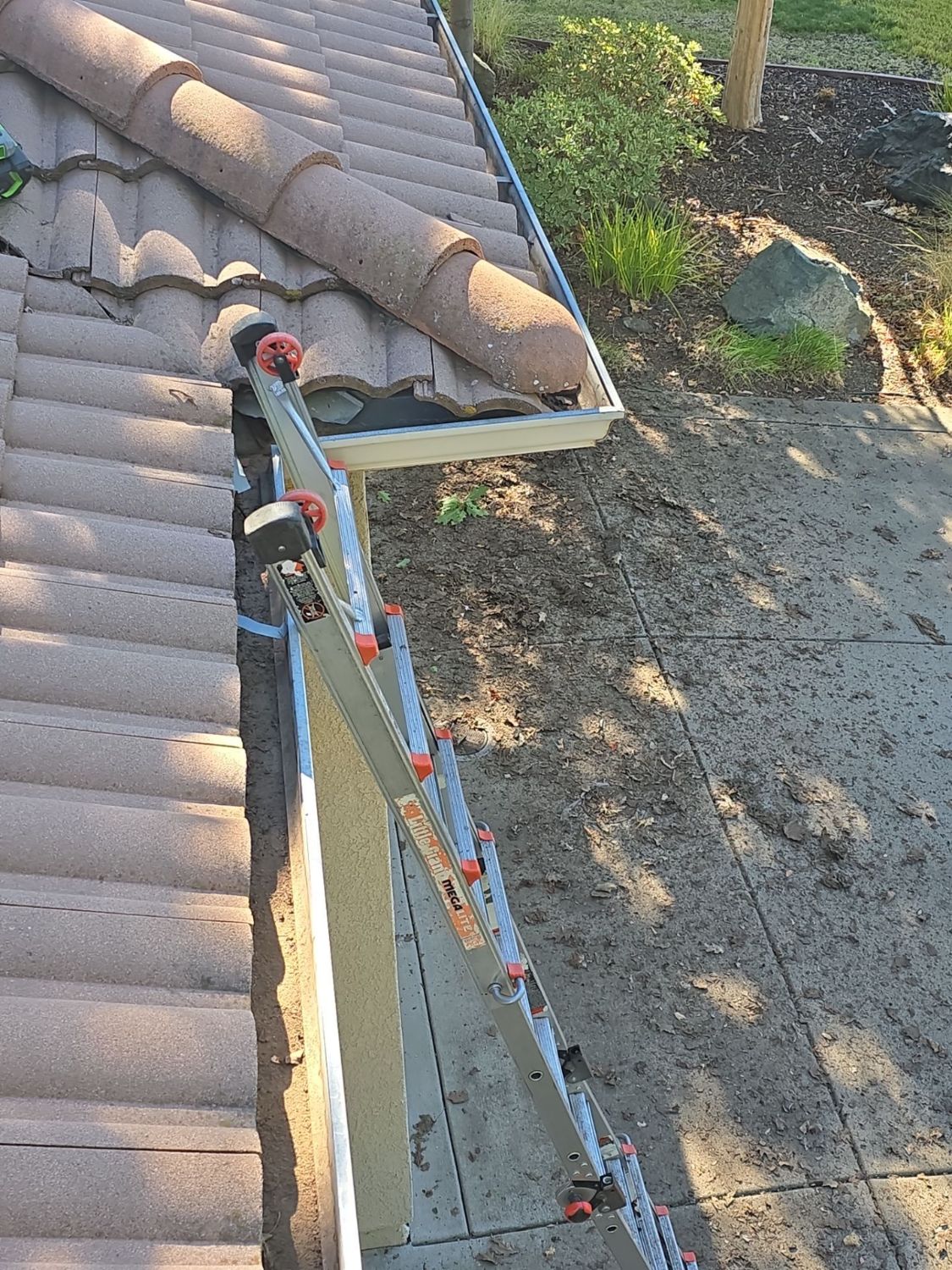
Concrete and clay tile roofs are everywhere across Sacramento, Elk Grove, Roseville, and Folsom, and nearly every one of them develops some kind of green, gray, or black growth eventually. Most homeowners call all of it "moss" and either ignore it or scrub at it with whatever's in the garage. The problem is that moss, algae, and lichen are three different organisms that damage tile in three different ways, and the wrong treatment on the wrong one can do more harm to the tile than the growth itself.
Here's how to actually tell them apart, what each one is doing to your roof while it sits there, and which fix matches which problem.
From the ground they can look similar, especially in early stages. Up close, the differences are obvious once you know what to look for.
| Growth | What it looks like | How it attaches | Risk to tile |
|---|---|---|---|
| Moss | Thick, green, cushion-like clumps | Anchors with rhizoids and holds water and debris against the surface | High, traps moisture and can lift or shift tiles over time |
| Algae | Dark green to black streaking or discoloration | Sits on the surface, doesn't anchor into the material | Low, mostly cosmetic staining |
| Lichen | Crusty, flat, gray-green patches that feel bonded to the tile | A symbiotic organism with root-like structures that work into the surface | Moderate, the hardest of the three to remove without damaging the tile underneath |
Not sure which one is on your roof?
A free inspection tells you exactly what you're dealing with before anyone touches a tile.
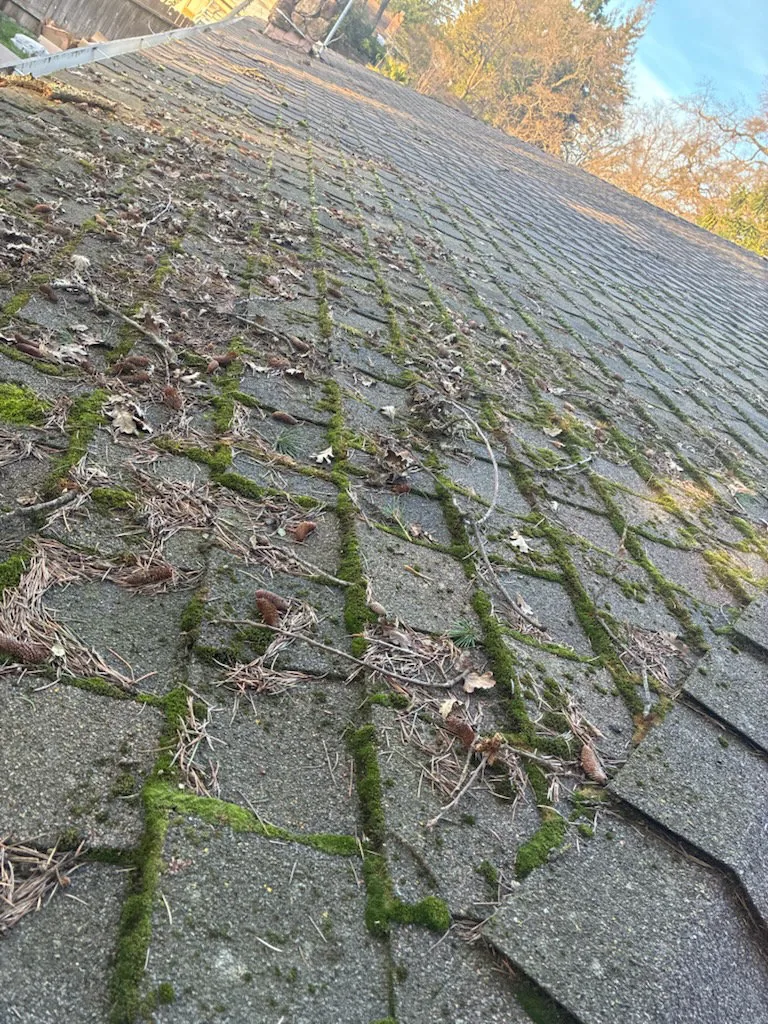
Moss is the growth most worth taking seriously on a tile roof. It anchors itself with tiny hairlike rhizoids and then behaves like a sponge, holding moisture against the tile surface long after the rest of the roof has dried out. On a shingle roof that mostly means granule loss. On a tile roof, it means the moss and the debris it traps can work into the gaps between tiles and, over enough seasons, physically shift or lift them out of position.
Shaded valleys and north-facing slopes are where it shows up first, since those spots stay damp the longest after a storm. If you've only ever noticed moss in one section of an otherwise clean roof, that's almost always why.
Moss already visible in your valleys?
Catching it early is a soft wash treatment. Catching it late can mean resetting shifted tiles.
The dark streaking a lot of homeowners mistake for dirt or mold is usually algae, specifically a blue-green cyanobacteria that shows up more on asphalt shingles than tile, but still appears on tile roofs in humid, shaded spots. Unlike moss, algae doesn't anchor into the surface. It's a surface-level discoloration, not something physically gripping the tile.
That makes it the least urgent of the three from a damage standpoint, but it's also the one that affects curb appeal the most, since the streaking is usually visible from the street and tends to spread across a wider area than moss does.
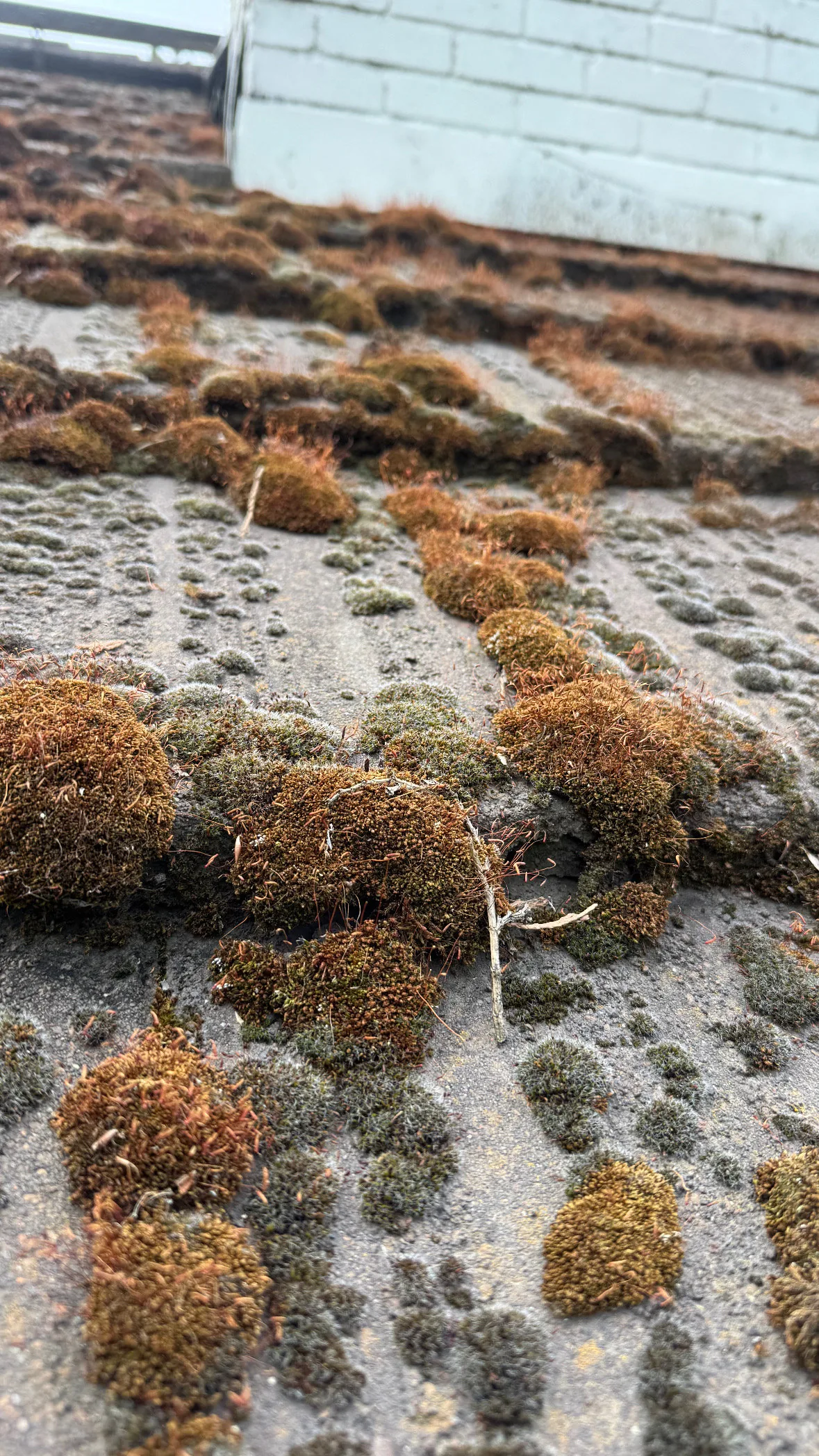
Lichen is actually a symbiosis of a fungus and an algae living together, not a true algae on its own, and that combination is what makes it so stubborn. It bonds tightly to the tile surface and, unlike algae, has structures that work into the material it's attached to. Scraping or pressure washing lichen off a tile roof risks taking a layer of the tile's surface coating with it.
Extension and roofing sources differ on how much actual structural risk lichen poses to a roof. Some consider it mostly cosmetic and even mildly protective against weathering. Others recommend removing it anywhere it's thick enough to interfere with water flow through a valley, which is the same practical standard worth applying to a tile roof: leave light lichen alone if it's not blocking drainage, and have a professional remove anything heavier the right way.
Lichen that's bonded on for years needs a careful hand, not a pressure washer. We know the difference.
This is the single most common mistake we see homeowners make or almost make on a tile roof. Concrete and clay tiles have a surface coating and, in older clay tiles, a glaze that direct pressure can strip or crack. A pressure washer aimed at lichen or heavy moss doesn't just remove the growth, it can take tile surface with it, and a cracked or chipped tile is a repair bill that dwarfs whatever the cleaning would have cost. Our full breakdown in Pressure Washing 101 covers why this same logic applies across roofing materials, not just tile.
The safer, standard approach for all three growths on tile is a soft wash: a cleaning solution applied at low pressure that does the actual work, followed by a longer dwell time and a rinse, rather than force doing the lifting.
| Method | Safe for tile? | Why |
|---|---|---|
| High-pressure washing | No | Strips or cracks the tile's surface coating and glaze |
| Scraping by hand | Only for isolated spots, carefully | Risk of chipping tile edges if done aggressively |
| Soft wash with dwell time | Yes | Solution does the work at low pressure, no abrasion |
Already tried scraping or a rental pressure washer?
If anything looks chipped or cracked, get it checked before the next rain finds the gap.
Dwell time is the part most DIY attempts skip, and it's the part that actually does the work. A moss or algae treatment solution typically needs 20 to 45 minutes sitting on the surface before it's effective, not a quick spray and rinse. Dead moss and algae often continue sloughing off naturally over the following weeks as rain or irrigation runoff rinses the roof.
A professional roof cleaning averages $461 for most homes, and it's done the safe way the first time.
All three growths return to the same shaded, slow-draining spots unless something about the local conditions changes. A few things genuinely help on tile specifically.
Tired of the same valley growing moss every year?
Pairing a cleaning with a zinc strip install is a one-time fix for a recurring problem.
Sometimes what looks like a simple cleaning job on the surface is masking something that needs a repair instead. If moss has already worked between tiles and you notice any shift, a gap, or a tile that rocks when touched, that's a repair conversation, not a cleaning one. The same applies if your roof also carries solar panels, since the same shaded buildup that feeds moss also costs you real output, and it's often worth checking both while a crew is already on the roof.
Check both your roof and your panels in one visit before the next rainy stretch.
Right now, heading into the heart of the Sacramento rainy season, is exactly when existing moss and lichen get the sustained moisture they need to spread fastest. Our pre-winter prep guide covers the rest of the seasonal checklist if you haven't had a full walk-around yet this year, and checking valleys for growth belongs on that same list.
If you're not sure whether what you're looking at is worth a treatment-only visit or something more involved, that's exactly what a free inspection settles, without guessing from the ground or risking a DIY method that's wrong for tile.
See if we're already working near you
Check whether your neighborhood is in our service area before booking.
Questions we hear most from tile roof homeowners trying to identify what's actually growing up there.
Gutter Maintenance
A cleaning clears leaves and debris. An inspection checks whether the gutter itself is still sound. Here's what gets missed when you only ever book one of the two.
Gutter Maintenance
A downspout extension costs about $30 and takes twenty minutes to install, but most Sacramento homes still dump roof water right at the foundation. Here's why that matters and how to fix it.
Storm Season
Once it's safe to go outside, here's a practical, ground-level walkthrough of what to look at on your roof, gutters, downspouts, and yard before the next system rolls in.
Free inspection, firm price