
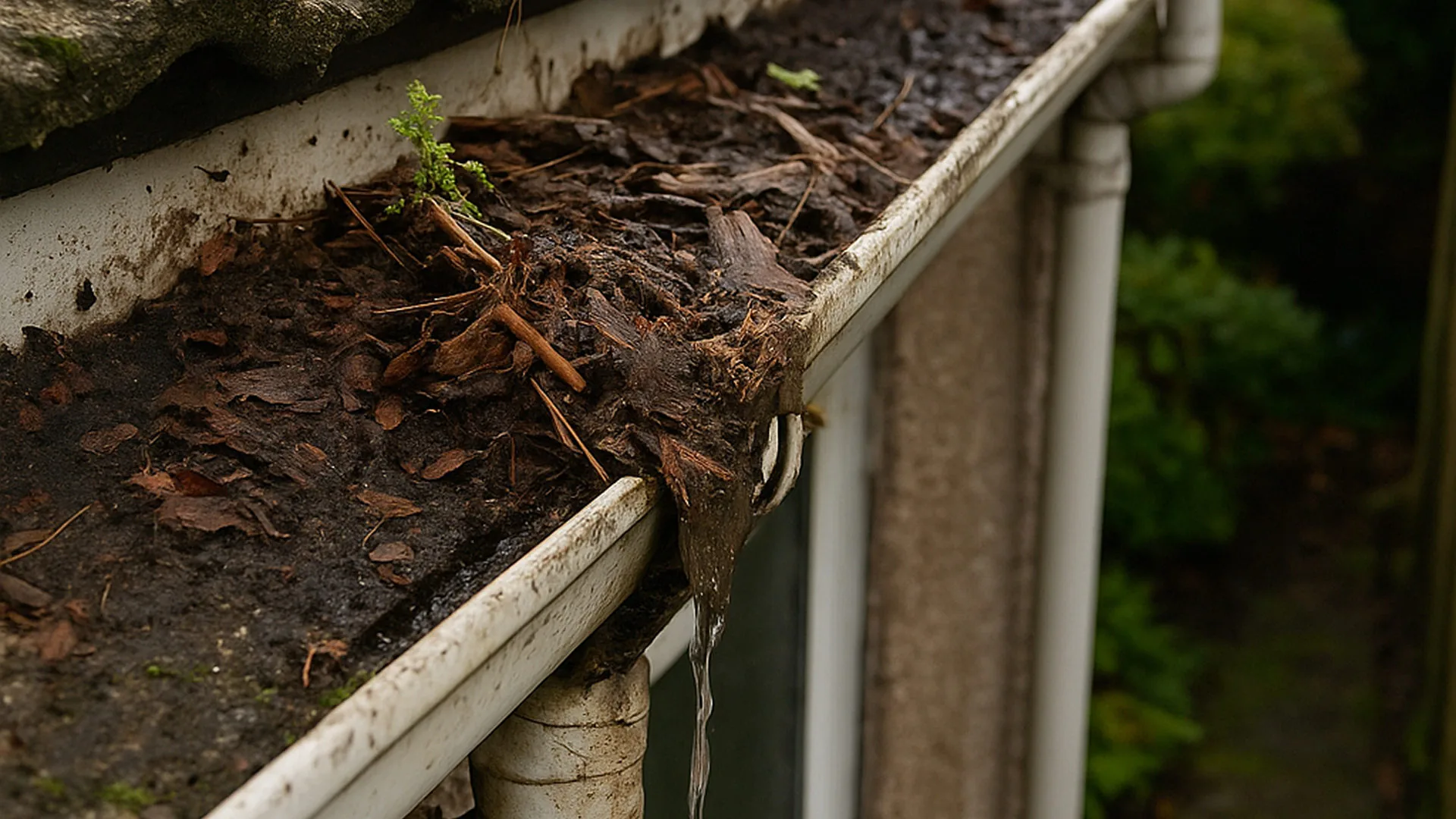
Gutter Cleaning
How Often Should You Really Clean Your Gutters in the Sacramento Area?
The standard advice is twice a year, but Sacramento's tree cover and rainfall pattern can change that math. Here's how to actually figure out your schedule.
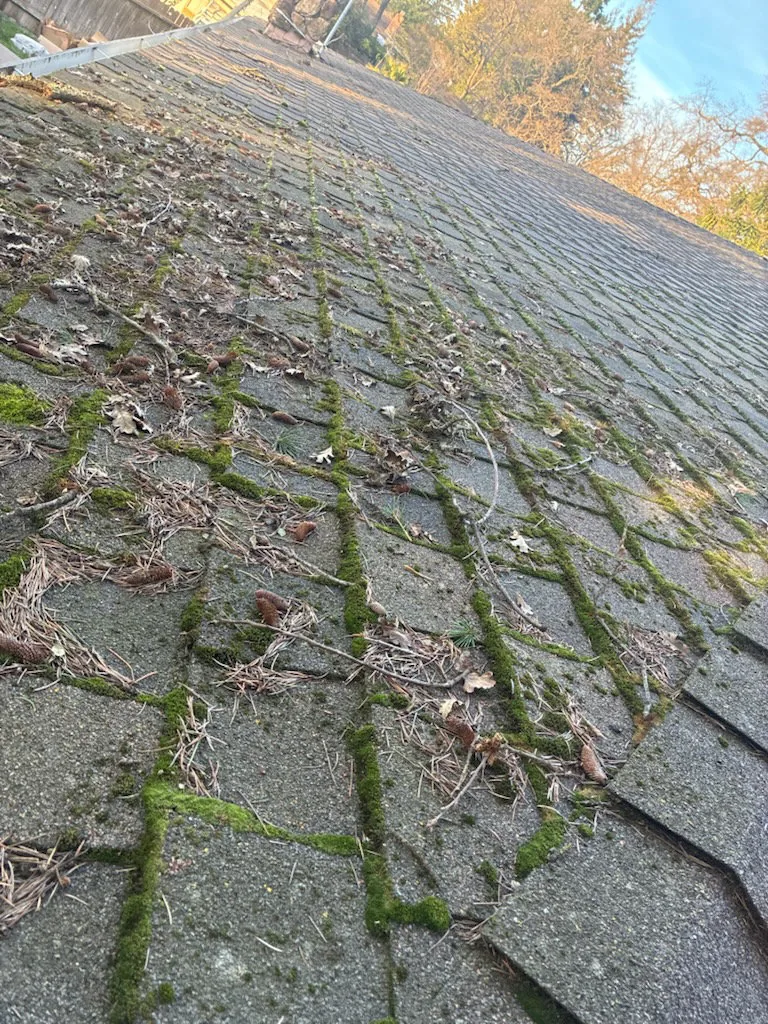
Moss works like a sponge. Once it establishes itself on a roof, it holds water against the shingle surface long after the rest of the roof has dried out, which accelerates granule loss and shortens the shingles' effective lifespan.
Shaded, north-facing roof sections and valleys are the most common places to find it, since they dry out the slowest after a storm.
As moss grows and thickens, it can physically lift shingle edges, creating small gaps where wind-driven rain can get underneath. Once water gets under a shingle, it's no longer a surface problem, it's a leak risk.
Root-like structures from moss and the debris that collects around it can also work their way into shingle seams over time, which is a big part of why it needs to be removed rather than left to sit.
Scraping moss off aggressively can do more damage than the moss itself by tearing shingle granules loose. A proper soft wash treats the moss and lifts it without that kind of physical abrasion.
A professional roof cleaning runs $461 on average and is a lot cheaper than the alternative: replacing a roof section that failed because moss was left to do its work for a few extra years.
Gutter Cleaning
The standard advice is twice a year, but Sacramento's tree cover and rainfall pattern can change that math. Here's how to actually figure out your schedule.
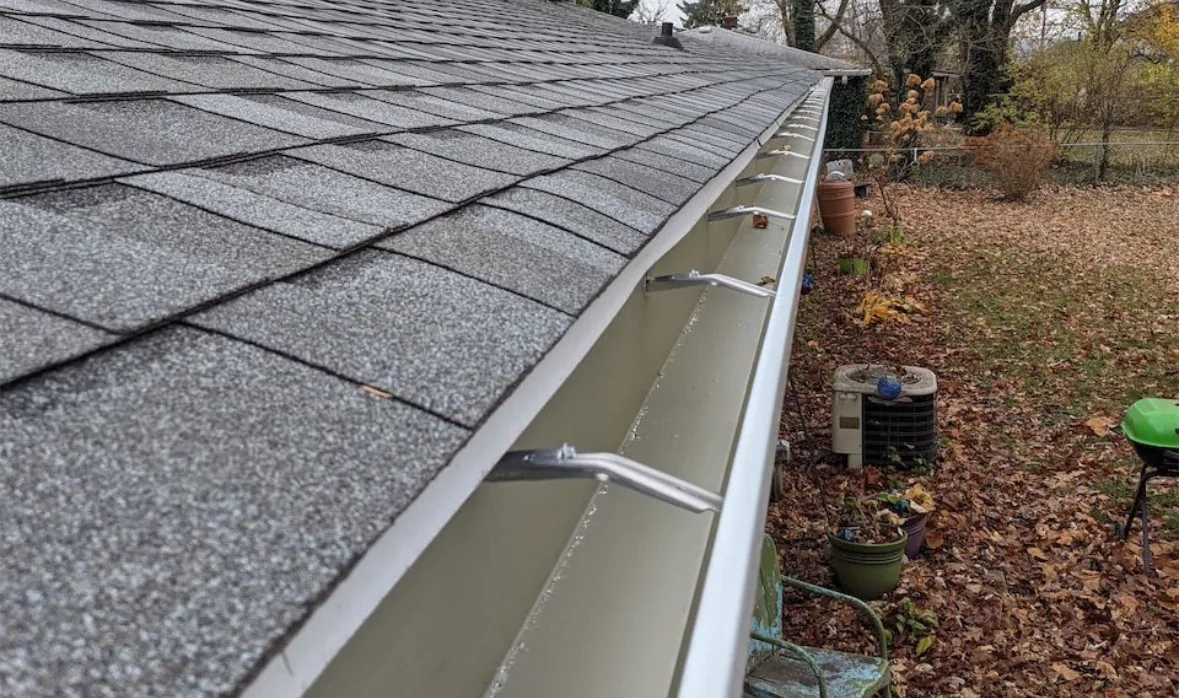
Gutter Maintenance
Gutters rarely fail without warning. These are the signs worth catching early, before a small problem turns into water damage.
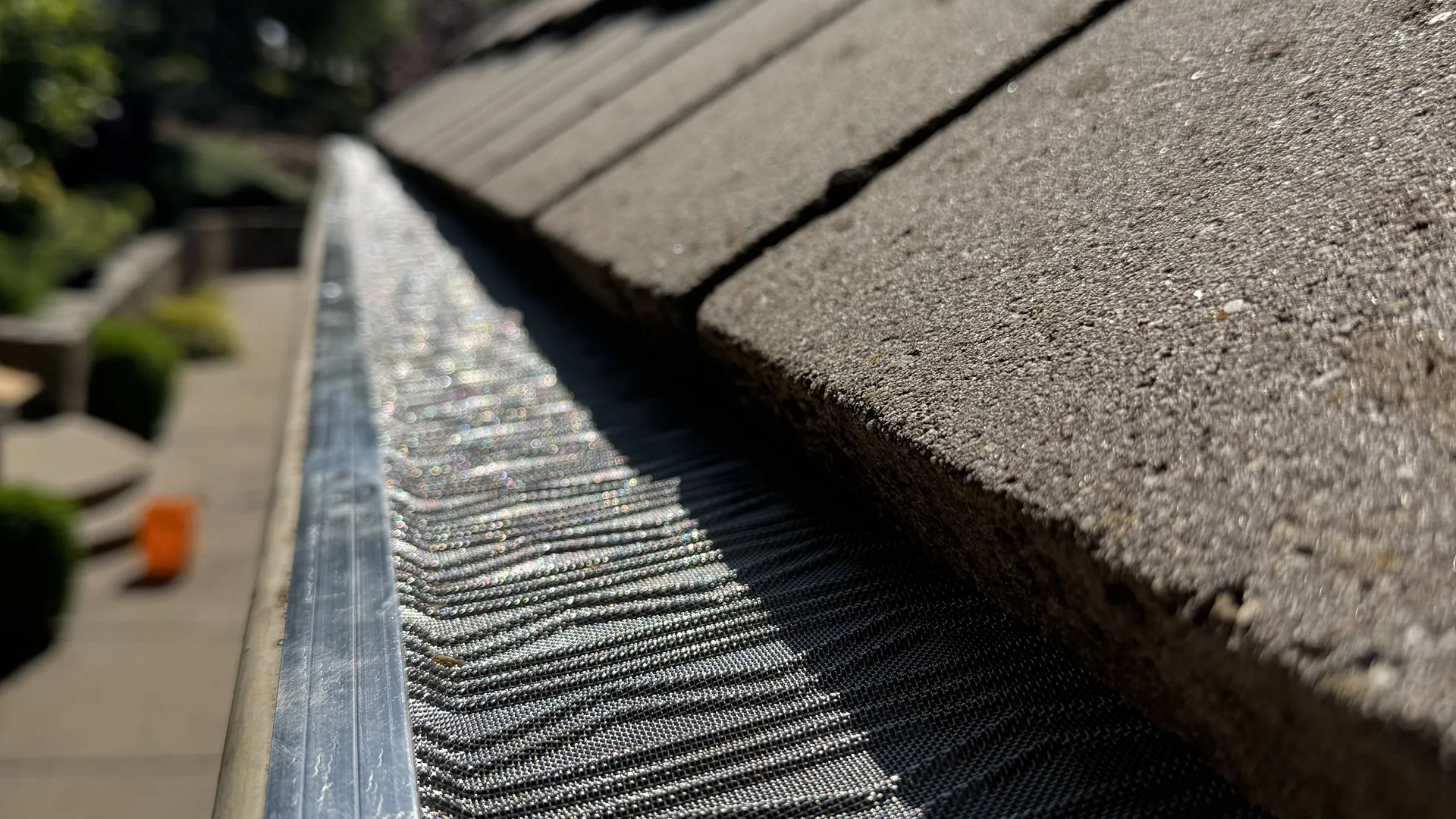
Gutter Guards
Gutter guards aren't magic, but the right kind can genuinely cut down on maintenance. Here's what they actually do, and don't do.
Free inspection, firm price