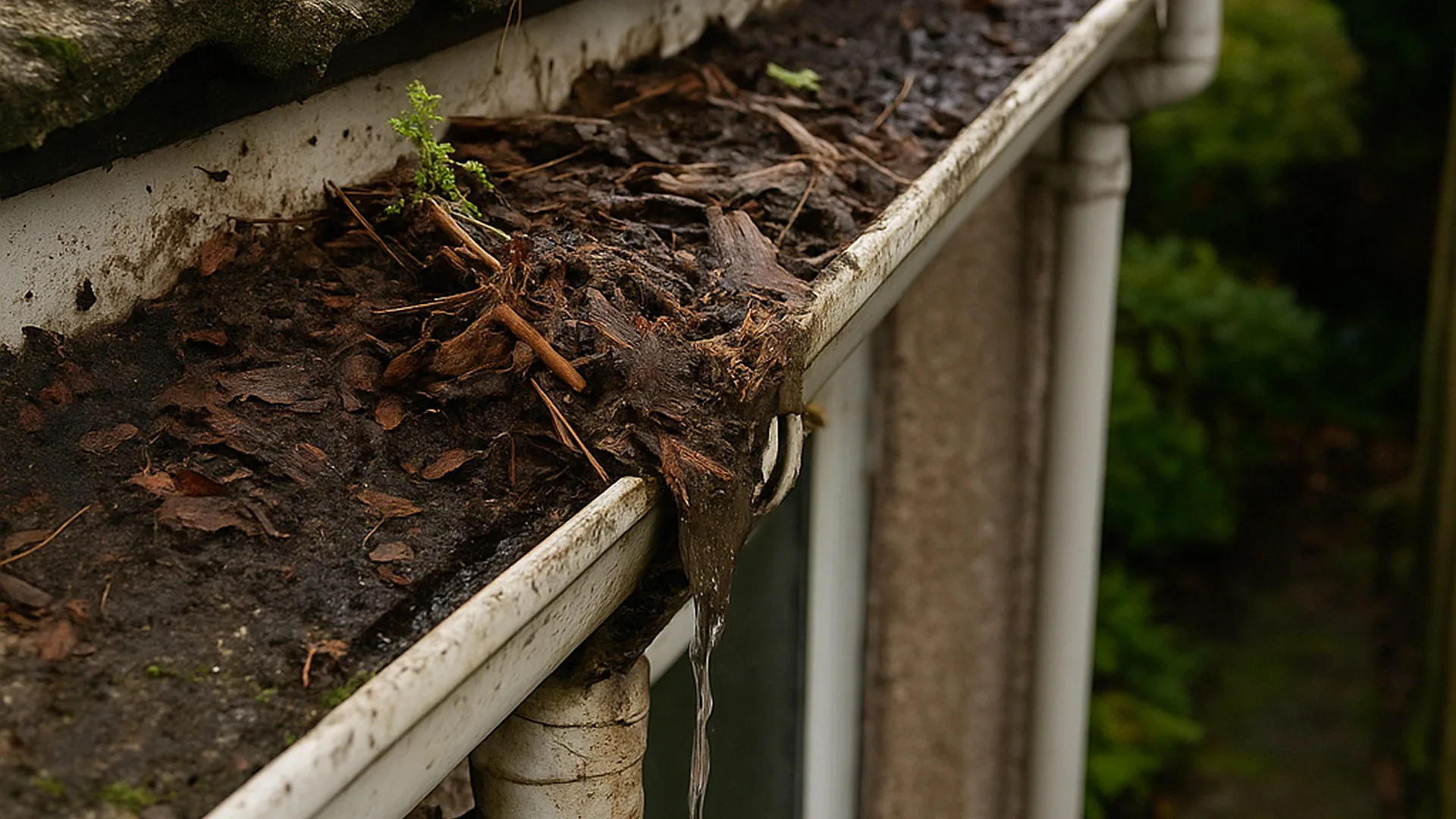
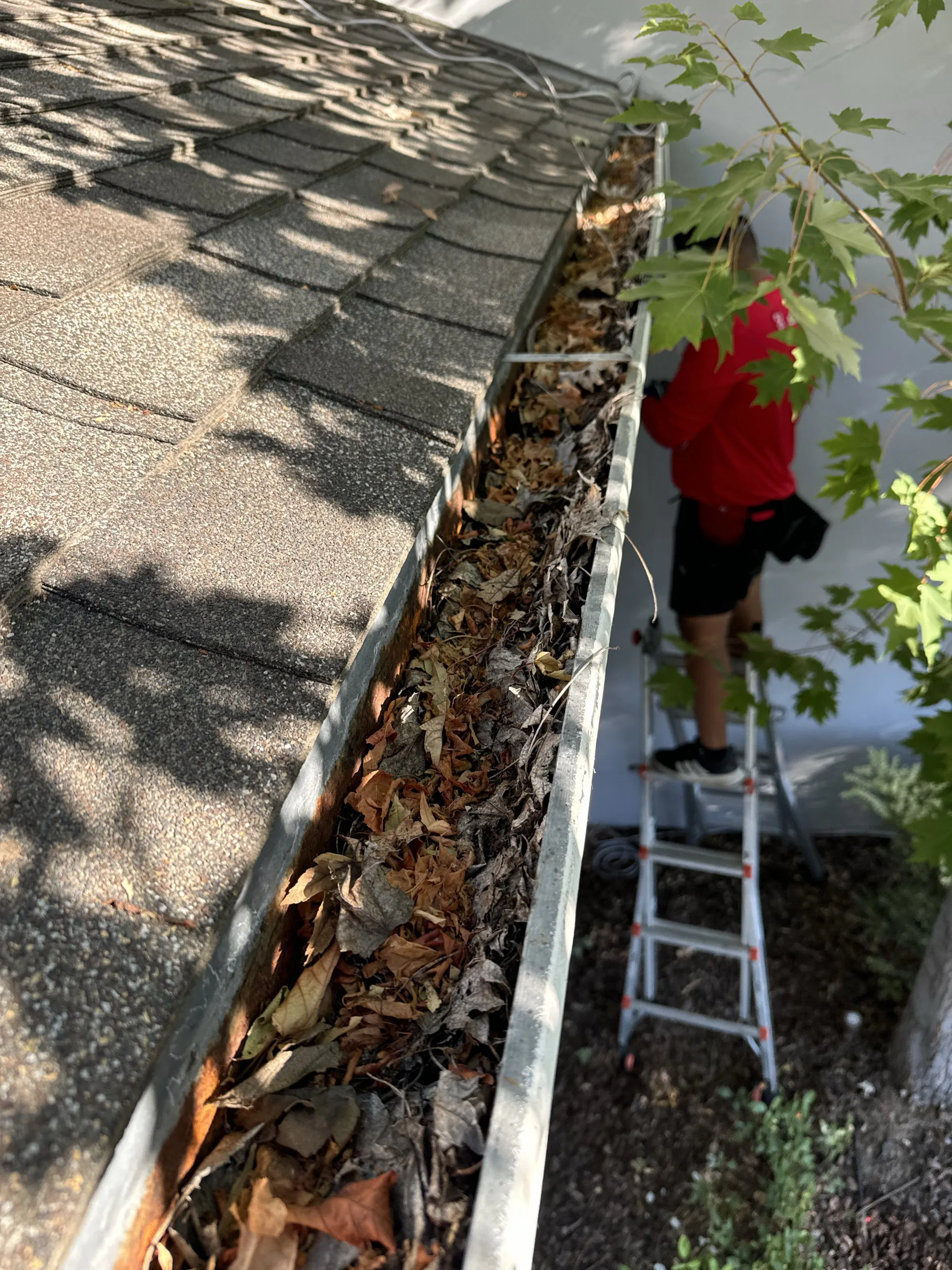
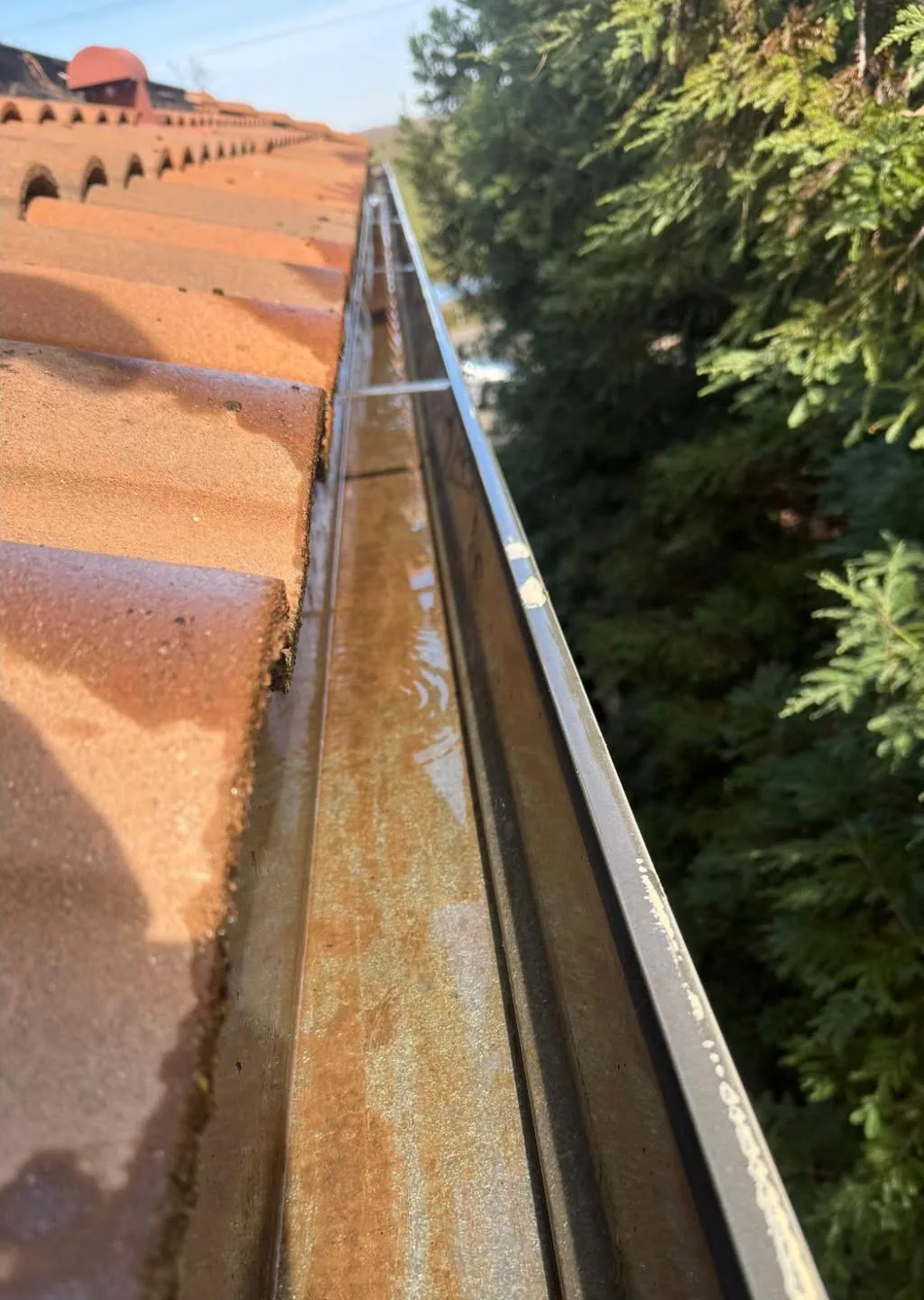
Tree cover is the biggest factor, and not all trees clog a gutter the same way. Pine needles weave into a dense mat that resists wind and rinses slowly, so they tend to accumulate steadily rather than blowing clear on their own. Oak leaves break down into a heavy, compost-like sludge that holds moisture against the gutter metal, which is worse for corrosion than dry debris sitting on top. Sweetgum and liquidambar, common across Sacramento's older neighborhoods, drop both leaves and small spiked seed pods that jam downspout openings specifically, which is a different failure mode than a gutter trough simply filling up.
Roof pitch and gutter size matter too. A steep roof sheds debris fast during a storm and can overwhelm an undersized gutter in a single heavy rain, while a shallow roof tends to let debris sit and decompose in place, which is slower to cause an overflow but harder to notice from the ground since it doesn't spill over as dramatically.
Rainfall timing plays a role as well. The Sacramento area gets the bulk of its yearly rainfall packed into a few winter months, so a gutter that's already partly clogged going into November is set up to overflow right when it matters most. For the region's broader rainfall pattern, is the most reliable public source, and it's the same dataset we reference across our .
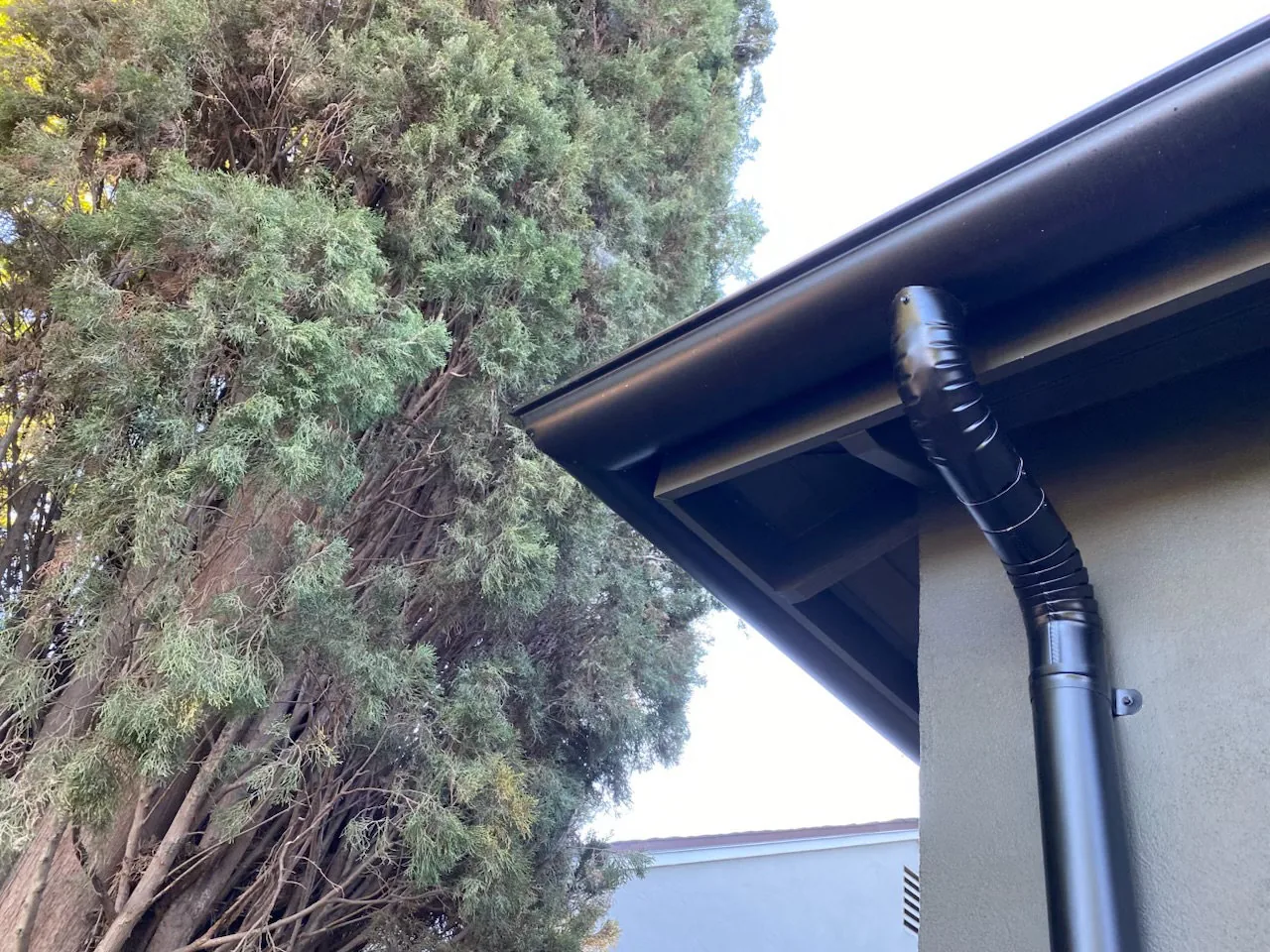
Home age and the gutter system itself are the last piece. An older sectional system with worn seams needs more frequent checks than a newer seamless system simply because there are more places for a slow leak to start, independent of how much debris is actually collecting.