Sacramento’s straightforward exterior-care team
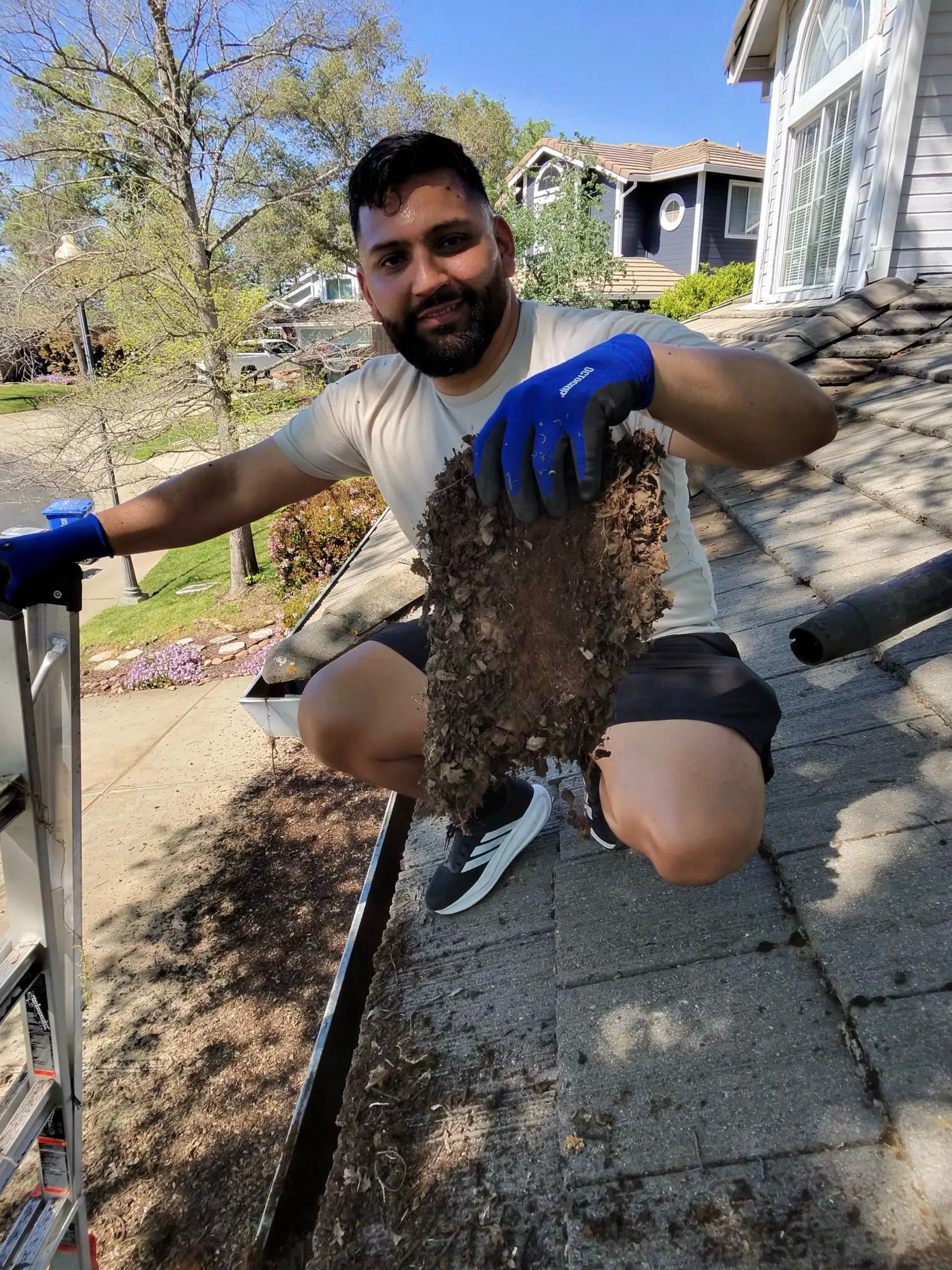
A Dunzo Gutters technician holding up a solid mat of compacted roots and debris pulled from a gutter

If you've heard scratching in the eaves, found droppings building up on the patio, or pulled nesting material out of your gutters more than once, you're not dealing with a one-time visitor. Once a bird finds a good spot on your roofline, it tends to come back, and it tells other birds about it too. This guide covers why that happens, what it actually costs you to let it continue, and the humane, lasting fix.

Why your roofline looks like prime real estate to birds

From a bird's perspective, a typical home offers almost everything a tree cavity would: a dry, sheltered gap, protection from wind and predators, and it's usually warmer than the surrounding air thanks to attic heat escaping through vents and eaves. Eaves, roof vents, gutter ends, and the shaded underside of solar panels all create exactly that kind of gap.

The problem compounds once nesting material shows up. A single successful nest in a gutter or under a panel is a signal to other birds that the spot works, and the same access point often gets reused season after season unless it's actually closed off.

The most common access points, and why birds pick them

A handful of spots account for most of the activity we see on an inspection.

Access pointWhy birds choose itWhat closes it off
Eaves and soffitsDry, sheltered gaps with attic warmth nearbyFine mesh fitted to the gap
Roof and exhaust ventsWarm airflow, already a cavity shapeVent covers that still allow airflow
Gutter ends and openingsEasy entry point, debris already collectingGutter-end screening
Under solar panelsShaded, sheltered, rarely disturbedMesh skirting around the panel perimeter

What it actually costs you to let them stay

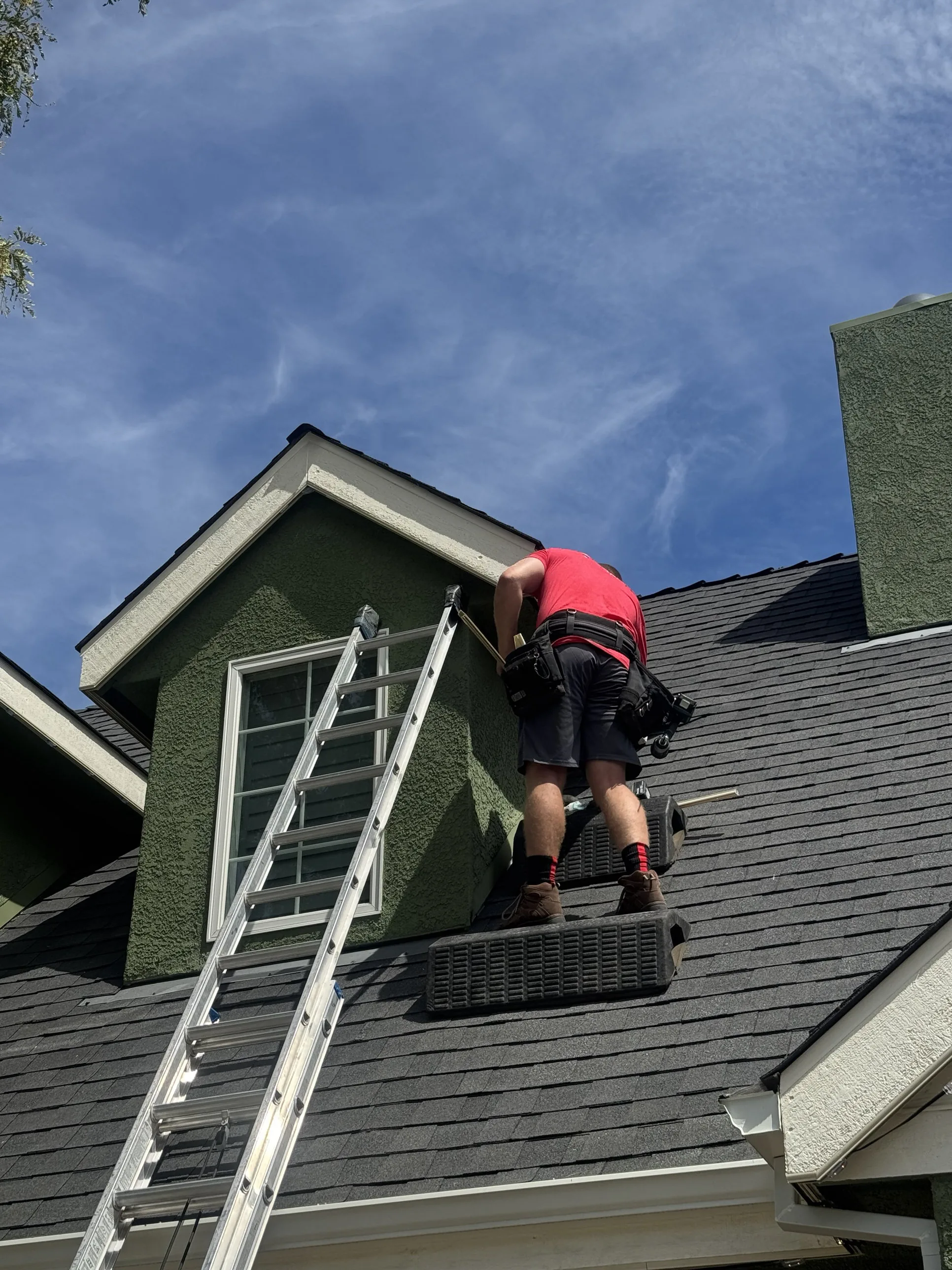
A Dunzo Gutters technician working on a roofline near a dormer window

This isn't just a noise or mess problem. Left alone, nesting activity creates three distinct and genuinely expensive issues.

  • Acidic droppings: bird droppings are acidic enough to degrade roofing granules and paint if they're left to accumulate, the same kind of surface damage covered in Why Roof Moss Is a Bigger Problem Than It Looks
  • Blocked drainage: nesting material is a common, avoidable cause of gutters backing up right when a storm actually hits, see The Hidden Cost of Ignoring a Clogged Gutter for how that cascades into real repair costs
  • Fire and vent risk: nests built into vents and exhaust outlets can block airflow and, in some cases, become a genuine fire hazard

Hearing activity in your eaves right now?

A free inspection tells you exactly what's accessing your roofline and where.

Get a free inspection

The legal side: why exclusion, not removal

Most native bird species, and their active nests, are protected under the Migratory Bird Treaty Act, which prohibits killing, capturing, or disturbing protected species without specific federal authorization. That's a big part of why legitimate bird proofing is about closing off access points, not trapping or harming birds that are already there.

If an active nest is already present when we inspect a home, the right move is to plan the exclusion work around it, not to remove it outright. A reputable provider should walk you through that distinction before doing anything.

Audubon recommends the same approach for an active nest found anywhere on a property: leave it in place, keep pets and foot traffic away until the young birds fledge, and only act once it's empty, which is exactly how we plan exclusion work around a nest that's already there.

What a proper exclusion job actually includes

"Bird proofing" covers a specific set of fixes, each matched to a specific access point rather than a single generic treatment.

  • Eave and vent mesh that closes off the gaps birds use to get into eaves, soffits, and roof vents
  • Solar panel perimeter guards, mesh skirting around the edge of your array that keeps birds from nesting underneath without touching the panels themselves
  • Gutter-end screening that stops nesting material from building up and clogging the run
  • Humane exclusion only: access points get blocked, birds already present don't get trapped or harmed

Signs you already have a problem

Any one of these is worth a closer look before it gets more established, and if you've already tried a vacuum attachment or scoop to clear nesting material yourself, that's exactly the kind of debris those ladder-free tools consistently struggle with.

  • You're hearing scratching or rustling in the eaves or attic
  • Droppings are building up on your patio, walkways, or panels
  • You've found nesting material in your gutters more than once
  • Birds are roosting under solar panels or on roof ledges
  • You've noticed staining or damage starting on the roofline

Recognize two or more of these? Get it inspected before nesting season.

Get a free quote

Why DIY bird deterrents usually fail

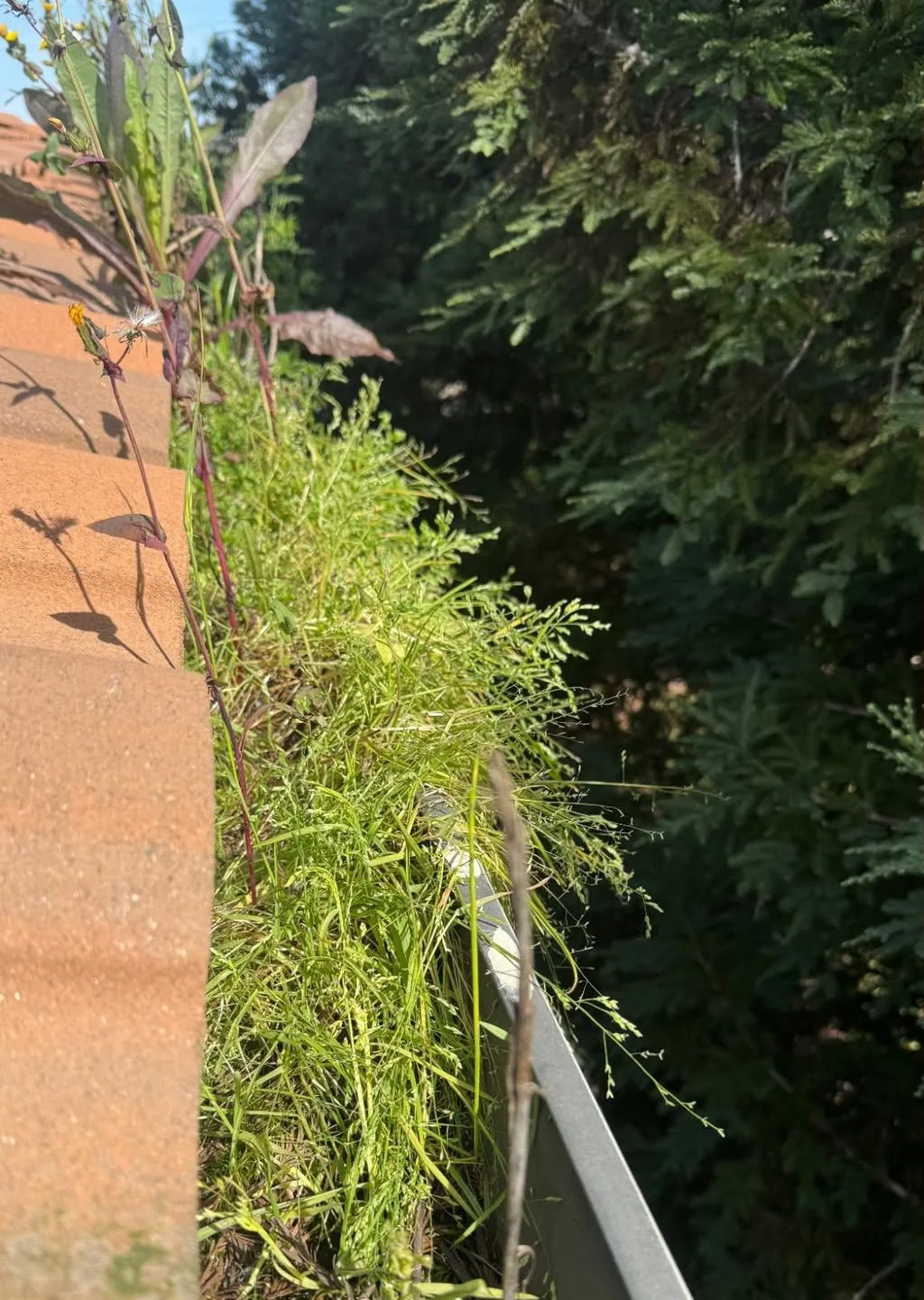
A gutter choked with weeds and grass on a tile-roofed Sacramento home before cleaning

A lot of homeowners try the cheap fixes first, and it's worth knowing why they usually don't hold up long-term.

  • Fake owls and predator decoys: birds habituate to a stationary decoy within days once they realize it never actually moves
  • Reflective tape or spinners: can reduce activity briefly but rarely addresses the actual access point, so birds just relocate a few feet over
  • Loose netting draped by hand: without proper tensioning and anchoring, it sags, tears, or leaves gaps birds squeeze straight through
  • Spikes placed on the wrong surface: effective on a narrow ledge, but birds simply nest on top of or around spikes installed loosely or on too wide a surface

How professional exclusion is done right

Netting or mesh that isn't properly tensioned or anchored sags, tears, or leaves gaps birds squeeze straight through. A proper job fits mesh and netting to your home's actual access points, not a generic one-size patch.

  • Mesh sized and fitted to each specific access point, not a single roll stretched across everything
  • Secured to resist wind and sun without sagging over time
  • Gutter-end screening installed without restricting water flow
  • A photo report showing every access point that's now closed off

Most jobs done in a single day

See current bird proofing pricing and what's included.

View pricing

Different birds, different problems

Not every bird on a Sacramento roofline behaves the same way, and knowing which one you're dealing with changes what the fix actually needs to cover.

BirdTypical access pointWhat it mainly damages
Sparrows and finchesSmall gaps in eaves and soffitsNesting material clogging gutters and vents
PigeonsOpen ledges, roof vents, under solar panelsHeavy, acidic droppings on roofing and siding
SwallowsEaves and overhangs, often in clustersMud nests that can mass in a single season
WoodpeckersPeck directly into fascia or sidingStructural holes, a different problem than nesting

When to get it done: timing matters

Exclusion work is most effective when it happens before nesting season ramps up, not after a nest is already established. Late winter, before spring nesting activity peaks, is the ideal window for most of the exclusion work covered here, mesh, vent covers, and gutter-end screening all go in cleaner and faster on an empty roofline than one with active nests to work around.

If you're already past that window and seeing active nesting, that's not a reason to wait until next year. It just means the work gets planned around the current activity first, which is exactly the judgment call a proper inspection makes.

Frequently asked questions

Questions we hear most often before a bird proofing inspection.

  • Will you hurt or remove the birds themselves? No. We focus on closing off access points humanely. If birds or an active nest are already present, we'll walk you through the right next step before doing any exclusion work.
  • How is bird proofing different from gutter guards? Gutter guards keep debris out of your gutters specifically. Bird proofing closes off the gaps birds use to get into eaves, vents, and under solar panels, a different problem with a different fix. See Are Gutter Guards Actually Worth It? for the guard side of that comparison.
  • Will netting affect my solar panel warranty? No. Installed correctly, the mesh sits at the panel's perimeter, not on the panel surface itself, so it doesn't interfere with the equipment or void your solar warranty.
  • How much does bird proofing cost? It depends on how many access points your home actually has. We give you a firm price after a free inspection, not a flat rate that ignores your specific roofline.
  • What time of year is nesting activity worst in Sacramento? Spring through early summer tends to be the most active nesting period, which makes late winter the best window to get exclusion work done before activity picks up.
  • Do I need to be home for the installation? No, as long as we can access the exterior of your home and any gated areas. We'll send a photo report once the job's done.

Free inspection, firm price

Ready to get this handled instead of just reading about it?