Sacramento’s straightforward exterior-care team
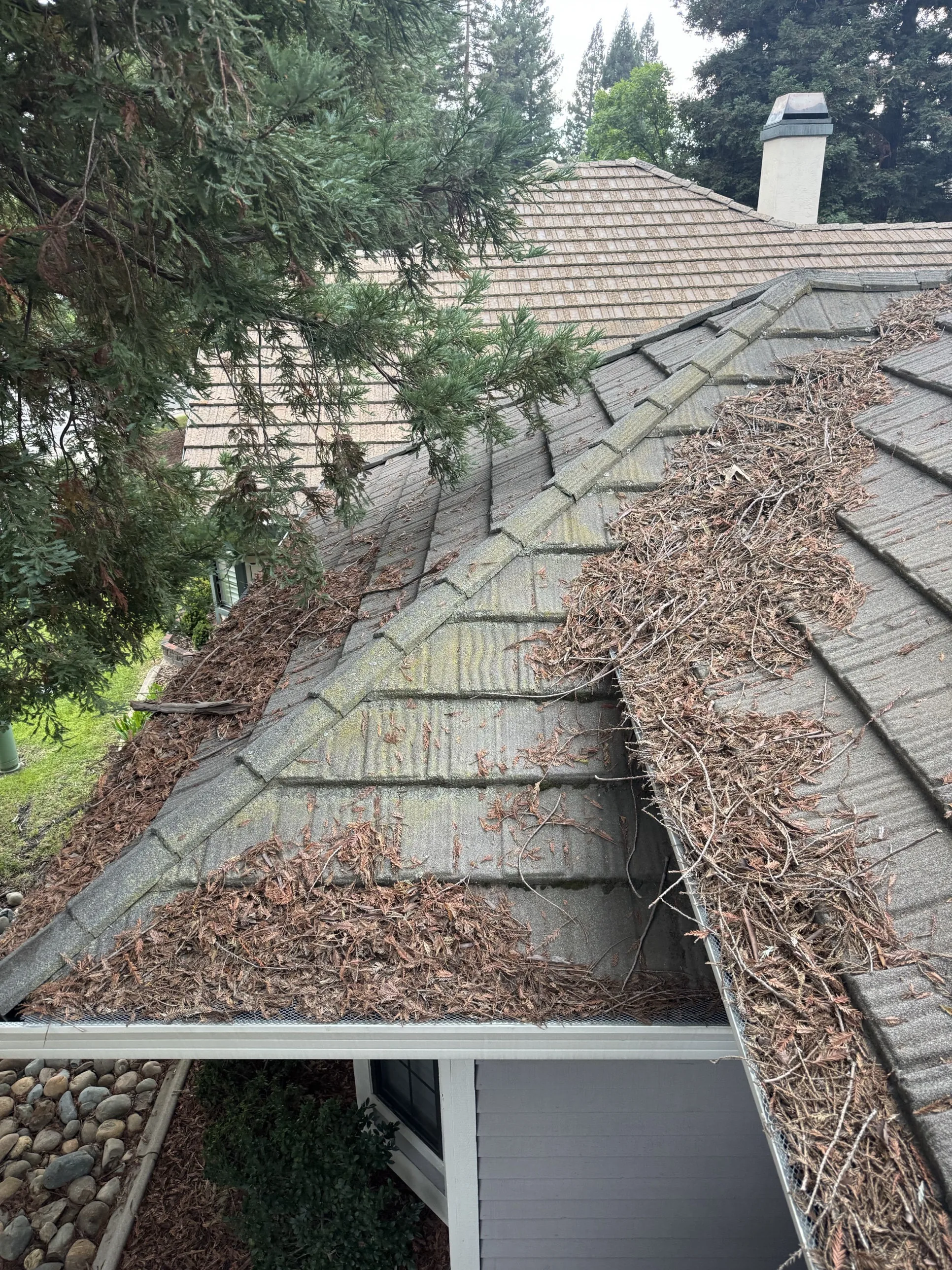
A roof valley buried in pine needles and debris on a Sacramento area home

Homeowners under oak trees and homeowners under pines both think they understand gutter maintenance, and they're usually both wrong about the other's problem. Leaves and pine needles clog a gutter in genuinely different ways, which means the fix that works great under an oak tree can completely fail under a pine, and vice versa. If your home in Sacramento, Elk Grove, Roseville, or Folsom has conifers anywhere near the roofline, this is worth understanding before your next cleaning or guard purchase.

Why needles aren't just small leaves

The core difference is size and shape. A leaf is broad and flat, which means most gutter guards, even basic ones, can block it simply because it's too big to fit through a reasonable opening. A pine needle is thin, rigid, and only a millimeter or two wide, which lets it slip through gaps and mesh sizes that stop leaves without any trouble at all.

This Old House's own testing found that needles are more difficult to clean out and block from entering gutters than deciduous leaves, specifically because of how easily they fit through standard guard openings. A guard rated great for leaves can still let needles through at a surprising rate.

Not sure what's actually clogging your gutters?

A free inspection tells you whether it's leaves, needles, or both before you buy the wrong guard.

Get a Free Inspection

How each one actually behaves once it's in the gutter

Leaves and needles don't just differ in size, they clog a gutter through completely different mechanisms.

BehaviorLeavesPine needles
How they clogPile up and block the channel in bulk, visible from the groundSlip through gaps, then mat together and pack down tightly
Weight when wetHeavy, but decomposes and compresses over a seasonSoaks up water like a sponge and packs under its own weight
Downspout riskMostly stays in the trough unless shreddedThin enough to wash straight into the downspout opening and jam there
Standard guard performanceBlocked by most basic guardsSlips through anything but fine mesh

The downspout problem nobody warns you about

A gutter channel packed solid with compacted pine needles and debris

This is the detail that catches most pine-covered homes off guard. Because needles are thin and the right width to funnel straight down a downspout opening, they don't just sit in the trough the way leaves do. They wash down into the downspout itself, where they mat together with other debris and form a dense plug that's much harder to clear than a trough full of leaves.

A gutter that looks relatively clear from the ground can still be completely blocked at the downspout if the home is under heavy pine cover, which is exactly why a visual check alone isn't enough under conifers. Our guide on how often you actually need a cleaning covers why pine-covered homes land at 2 to 3 cleanings a year instead of the standard twice-yearly baseline most guides recommend.

Downspout clogged but the trough looks clear?

That's the classic pine needle pattern. We flush every downspout, not just the visible channel.

Book a Gutter Cleaning

Why the wrong guard makes needles worse, not better

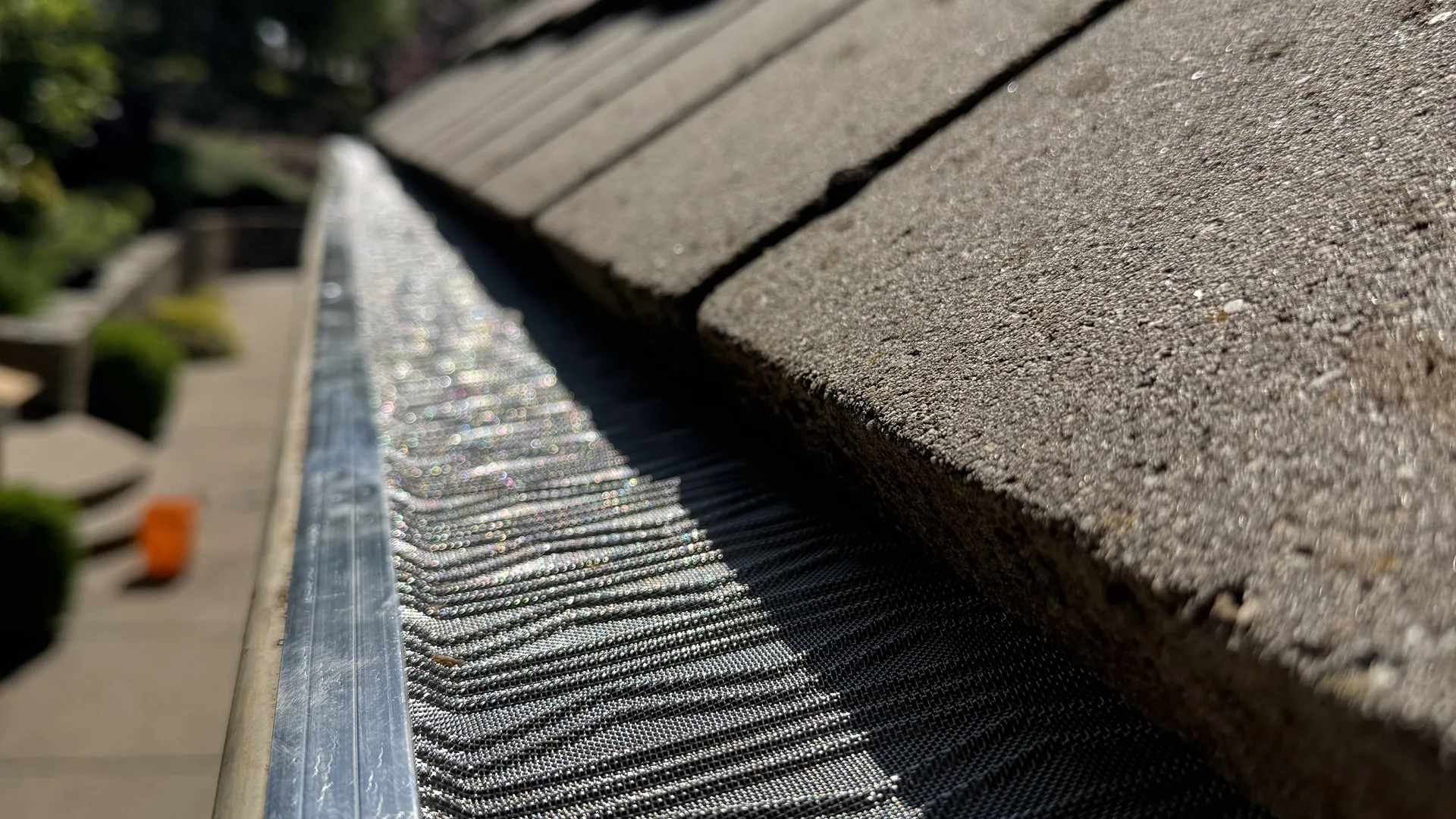
Close-up of fine micro-mesh gutter guard material rated to block pine needles

Reverse-curve guards work by letting water curve around a solid hood while leaves fall off the edge. That design relies on debris not sticking to the surface, which works fine for leaves but fails for needles, since needles don't fall cleanly off anything, they catch and accumulate right at the guard's opening instead.

Foam inserts and wide perforated panels have the same core problem: their openings are sized for leaves, not needles, so pine needles pass straight through and start the same packing process underneath the guard instead of above it, where it's even harder to spot and clear.

Guard typeGood for leaves?Good for pine needles?
Reverse-curve (surface tension)YesNo, needles catch at the opening instead of shedding
Foam insertSomewhatNo, needles pass straight through the pores
Wide perforated panelYesNo, openings are sized for leaves
Micro-mesh, 30-mesh or finerYesYes, the fine weave blocks thin debris leaves pass right through

Already have guards that aren't holding up to needles?

We'll tell you honestly whether it's a mesh problem or just time for a cleaning.

Ask About Gutter Guards

Mesh size and material actually matter here

If pine needles are the main debris load on your roofline, not every micro-mesh guard performs the same. A 30-mesh screen, meaning roughly 30 openings per square inch, is generally considered the right range for stopping thin debris like pine needles and fine grit, while coarser mesh ratings start letting needles back through.

Material matters too. Stainless steel mesh holds its shape and opening size over years of sun and weather better than aluminum mesh, which can distort slightly over time and widen its effective gaps. For a home under heavy pine cover considering guards for the first time, that's worth asking about specifically rather than assuming all micro-mesh products perform the same. Our full breakdown in Are Gutter Guards Actually Worth It? covers the broader cost and payback picture across guard types.

What this means for your cleaning schedule

Pine needles don't just need a different guard, they need a different calendar too. Needles shed year-round in smaller amounts rather than dropping all at once like deciduous leaves in fall, which means there's no single season where clearing the gutters once solves the problem for the year.

  • Deciduous trees (oak, sweetgum, maple): one heavy seasonal drop, typically needing a cleaning in spring and fall
  • Pine and other conifers: needles shed steadily year-round, typically needing 2 to 3 cleanings a year to keep pace
  • Mixed canopy with both: often needs the higher end of that range, since the two debris types pack together and compound each other

Pine trees overhead year-round?

A twice-a-year schedule probably isn't enough. We'll build one that actually matches your trees.

Get a Free Quote

Signs pine needles have already gotten ahead of you

A few things worth watching for specifically under heavy pine cover, since the warning signs don't always look like a typical leaf clog.

  • Water overflowing the gutter edge even though the trough itself looks relatively clear
  • A downspout that gurgles or drains slowly during moderate rain
  • A musty, matted mass visible when you look straight down into the downspout opening
  • Needles visibly accumulating on the roof surface in valleys faster than they're washing into the gutter

If any of this sounds familiar, the downspout is probably where the real clog is hiding.

Schedule a Cleaning

What a thorough cleaning needs to cover under pines

A cleaning that only clears the visible trough and skips the downspout misses exactly the problem pine needles create. Under heavy conifer cover, every visit should include a full downspout flush, not just a visual check, since that's where needles actually jam.

  • 1Full hand-clearing of the trough along the entire run, not just the visibly clogged sections
  • 2A downspout flush with water to confirm needles haven't matted and jammed further down
  • 3A check of roof valleys for needle buildup that hasn't washed into the gutter yet
  • 4A note on whether the current guard setup, if any, is actually rated for needles or just leaves

Get the full downspout-to-trough check, not just a quick scoop of the visible debris.

See Cleaning Pricing

Pairing the right guard with the right schedule

The two fixes work together rather than replacing each other. A properly rated micro-mesh guard cuts down dramatically on how much needle debris gets into the system in the first place, but it still needs an occasional check since even the best mesh can collect a surface layer of needles over time that benefits from a light brush-off. Homeowners who pair fine mesh with a once-a-year check-up tend to go years between full cleanings, compared to those relying on cleaning alone to keep up with a pine canopy.

If your home also deals with roof moss or lichen in the same shaded, needle-heavy valleys, it's often efficient to handle both in the same visit. Why Roof Moss Is a Bigger Problem Than It Looks covers that side of the equation.

See if a combined visit makes sense for your roofline

Check whether we're already working in your neighborhood.

Check Service Areas

Frequently asked questions

Questions we hear most from homeowners dealing with pine needle buildup specifically.

  • Will any gutter guard stop pine needles? No. Reverse-curve, foam, and wide perforated panel guards are all sized for leaves and let needles through. Only fine micro-mesh, roughly 30-mesh or finer, reliably blocks needles.
  • Why does my downspout clog even though my gutters look clean? Needles are thin enough to wash past the trough and jam further down in the downspout itself, where it's not visible from the ground.
  • How often should a home under pine trees get cleaned? Most pine-covered homes need 2 to 3 cleanings a year, since needles shed steadily rather than all at once like deciduous leaves.
  • Is stainless steel mesh really worth paying more for over aluminum? For a home under heavy pine cover, yes. Stainless holds its opening size over years of weather better than aluminum, which can distort and let more through over time.
  • Can I mix guard types if I have both pines and oaks nearby? It's simpler and more effective to install one guard rated for the smallest debris you expect, which in a mixed canopy means sizing for pine needles rather than leaves.
  • Do pine needles actually damage the gutter itself? Mostly it's a drainage and weight problem rather than direct material damage, though a packed, waterlogged mass left for a long time adds the same kind of strain on hangers that wet leaves do.

Free inspection, firm price

Ready to get this handled instead of just reading about it?