Sacramento’s straightforward exterior-care team
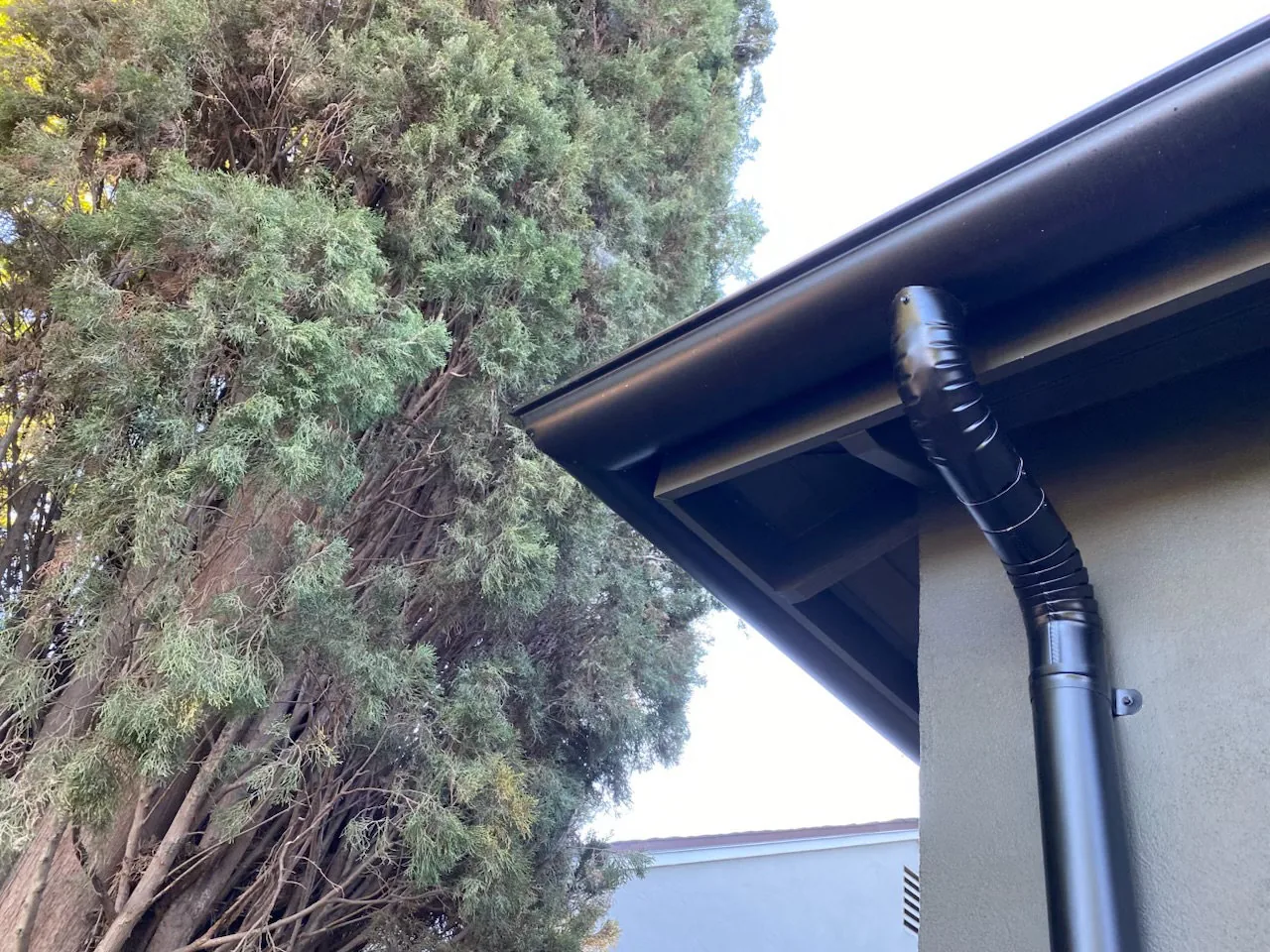
A finished seamless gutter and downspout on a home

How they're made

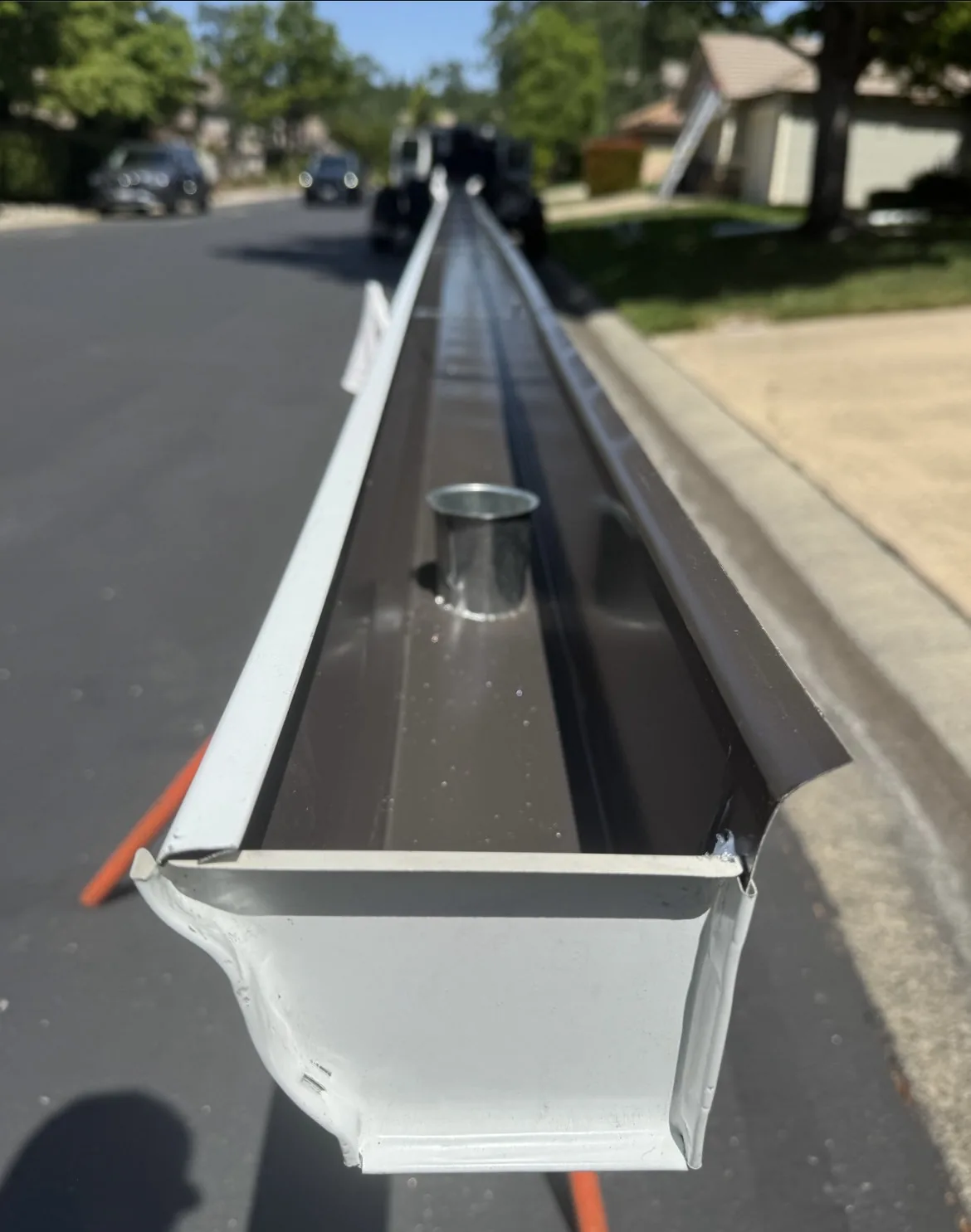
Sectional gutters come in pre-cut lengths, typically 10 feet, that get joined together with connectors once they're up on the house. Seamless gutters are formed on-site from a single coil of metal, cut to the exact length of each run, with no joints except at corners and end caps.

That difference sounds small, but it shows up in performance. Every seam in a sectional system is a potential leak point, while a seamless run only has to deal with seams at the corners, where leaks are far less common and much easier to seal properly.

The on-site forming process uses a portable rolling machine that a crew brings directly to your home. The machine feeds flat coil stock through a series of rollers that bend it into the finished gutter profile, cut precisely to match each roofline measurement, which is why a seamless install depends on accurate on-site measuring rather than ordering fixed-length stock ahead of time.

Side-by-side comparison

The practical differences are easiest to see laid out directly.

SeamlessSectional
SeamsOnly at corners and end capsEvery 10 feet along the run
Typical cost installed$4 to $9 per linear footOften slightly less upfront
InstallationFormed on-site, usually one dayPre-cut sections, more joint assembly
Leak risk over timeLower, fewer seams to failHigher, each seam is a potential leak point
DIY friendlinessRequires specialized forming equipmentMore accessible for a confident DIYer
Typical lifespan20 to 30 years with proper maintenanceSimilar material lifespan, but seams often fail first

Material options for seamless gutters

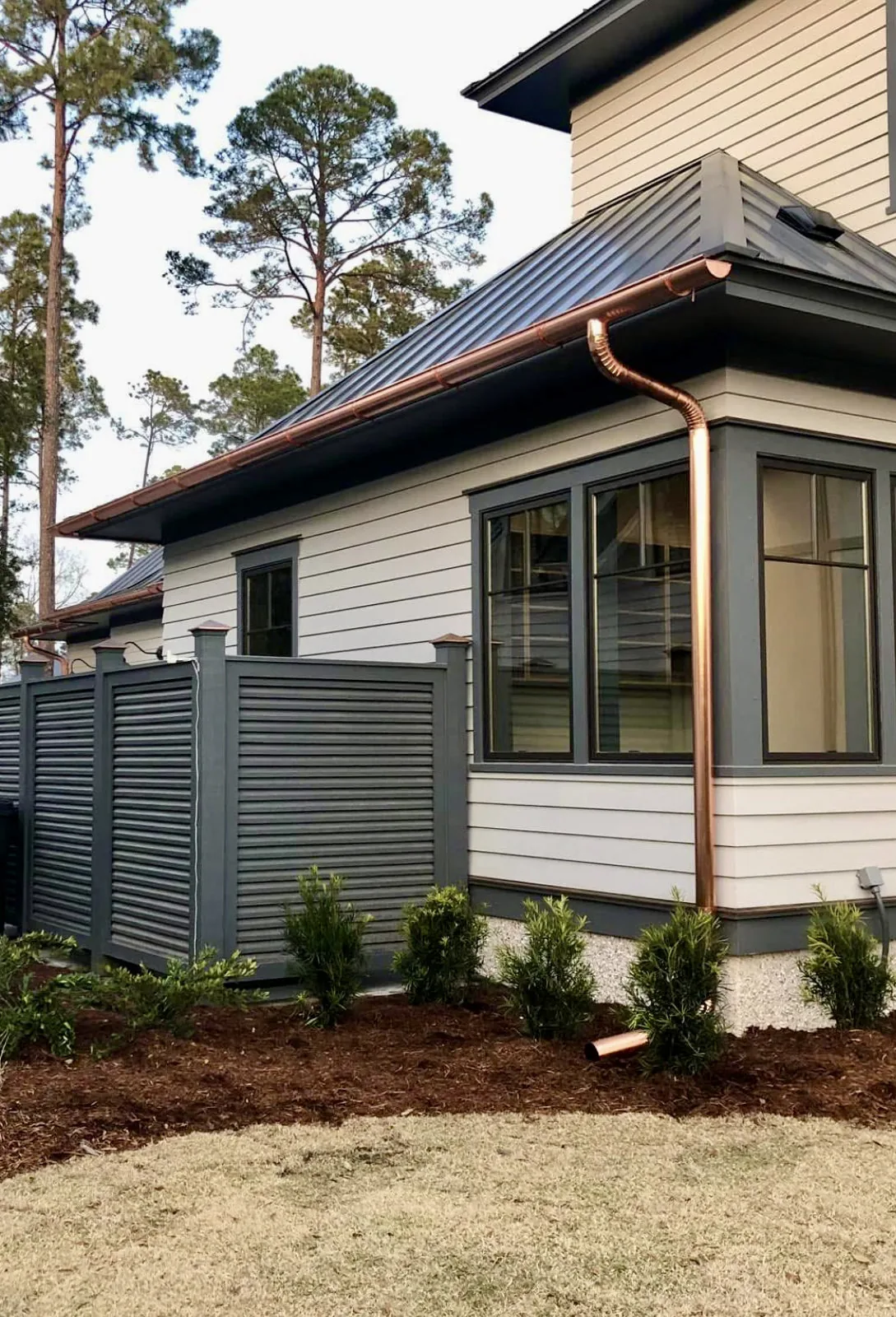
Finished copper seamless gutters and downspout on an upscale home

Seamless systems are typically formed from one of a few materials, each with different cost and durability trade-offs. This Old House has a broader rundown of gutter material trade-offs if you want an independent comparison beyond our own numbers.

  • Aluminum: the most common choice, lightweight, rust-resistant, and available in a wide range of factory colors
  • Steel: more rigid and dent-resistant than aluminum, usually a step up in cost
  • Copper: the premium option, develops a natural patina over decades and can last 50+ years with minimal maintenance
  • Each material can be formed seamlessly, so the seamless-vs-sectional choice is independent of which material you pick

Cost and installation

Seamless gutters typically run $4 to $9 per foot installed, and because they're formed on-site, the crew brings the forming equipment to you rather than hauling pre-cut sections. Installation is usually a single-day job for most homes, start to finish.

Sectional gutters can sometimes be a bit cheaper upfront, and they're more of a DIY-friendly option since the pre-cut pieces don't require specialized forming machinery. But the labor and material savings often get eaten up by more frequent leak repairs over time, which is the trade-off worth weighing against the lower sticker price.

See current seamless gutter pricing for your home.

View pricing

How weather exposure plays into the decision

Sacramento's climate adds a specific wrinkle worth knowing about: long, hot, dry summers followed by a concentrated, often heavy rainy season. Metal expands and contracts with temperature swings, and every seam in a sectional system is a point where that expansion can gradually work a joint loose over repeated cycles.

A seamless run isn't immune to expansion and contraction, but with fewer joints, there are simply fewer places for that movement to turn into an actual leak. Over a few decades of Sacramento summers and winters, that difference tends to compound in seamless's favor.

Which one actually makes sense for your home

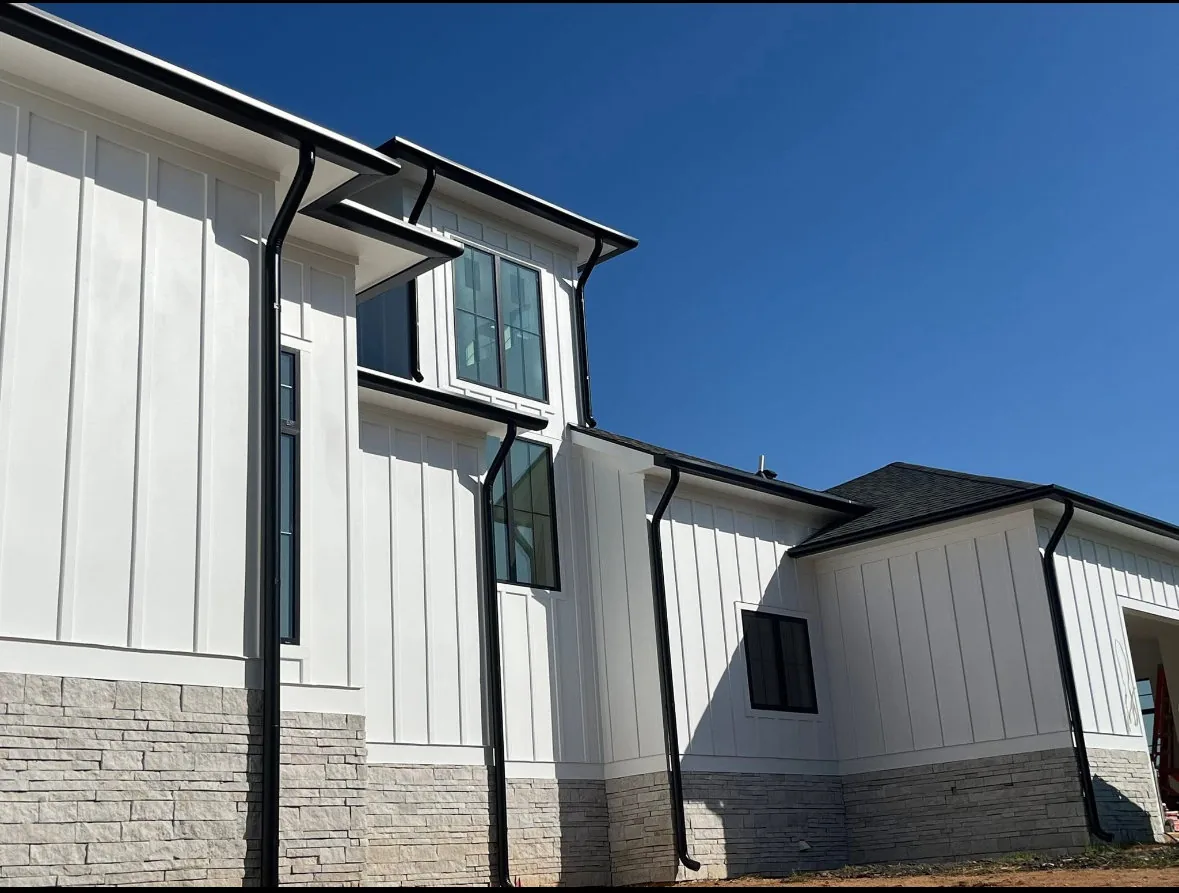
Color-matched black seamless gutters on a modern new-build home

If you're planning to stay in the home for a while, seamless is usually the better long-term investment simply because there's less to go wrong. If you're patching a single short run or working with a very tight budget, sectional can still get the job done.

Either way, proper installation matters more than the material choice. A poorly hung seamless gutter will underperform a well-installed sectional one. If you're comparing this against guards instead of a full replacement, Are Gutter Guards Actually Worth It? covers that separate decision.

Signs it's time to consider seamless

A few situations where switching from sectional to seamless tends to make the most financial sense. If you're not sure whether your current system needs this kind of upgrade or just a targeted fix, Gutter Repair or Full Replacement? walks through that decision in more detail.

  • Your current sectional gutters have had repeat leaks at the same seams more than once
  • You're already planning a full gutter replacement and want to avoid repeating the seam-leak cycle
  • You're repainting or re-siding and want the gutters to match the new color exactly, which seamless factory finishes make easier
  • You have a longer, unobstructed roofline where fewer seams make the biggest practical difference

Recognize your situation above?

Get a free inspection and an exact price for a seamless upgrade.

Get my free quote

Combining seamless gutters with guards

Seamless and gutter guards solve two different problems: seamless reduces leak risk at the seams, guards reduce how much debris gets in to begin with. They pair well together, and installing both at the same time generally costs less in combined labor than two separate visits. If you're already planning a seamless upgrade, it's worth asking about guards in the same quote.

Gutter size and profile options

Beyond the seamless-vs-sectional decision, both systems come in a few standard sizes and profile shapes, and picking the right one for your roof matters as much as the material or seam question.

ProfileTypical useNotes
5-inch K-styleMost common on standard residential roofsGood balance of capacity and cost for typical roof sizes
6-inch K-styleLarger roofs or steep pitches with higher water volumeHandles more water per run, often recommended for two-story homes
Half-roundHistoric or architecturally specific homesA traditional look, generally paired with round downspouts

Why undersizing is a common, avoidable mistake

A gutter that's too small for the roof's actual water volume will overflow in a heavy storm no matter how well it's installed or how new the material is, and no amount of cleaning or guards fixes an undersizing problem. This is one of the more common issues we find on older homes where a 5-inch system was installed on a roofline that, with additions or a steeper re-roof, now sheds more water than it was originally sized for.

Getting the sizing right during a seamless install is one of the advantages of an on-site, measured approach rather than guessing from pre-cut stock, since the crew is working from your home's actual roof area and pitch rather than a generic assumption. Bob Vila covers similar gutter-sizing guidance for homeowners comparing quotes on their own, if you want an independent reference point.

What the installation day actually looks like

Knowing the general sequence helps set expectations for how disruptive, or not, a seamless install actually is.

  • 1The crew measures every run on-site, noting corners, downspout locations, and any obstructions
  • 2Old gutters are removed and the fascia board is inspected, with repairs made to any soft or damaged sections before new gutters go up
  • 3The coil forming machine produces each length to the exact measurement, cut and ready to hang the same day
  • 4New gutters are hung with properly spaced hangers, and corners and end caps are sealed
  • 5Downspouts are attached and tested for flow before the crew leaves
  • 6Old material is hauled away, leaving the property clean

Ready to book a one-day seamless install? Get your exact quote.

Get a free quote

Common questions about color and matching

Seamless gutters are typically ordered in a factory-applied color baked onto the aluminum coil before it's ever formed, which gives a more consistent, fade-resistant finish than a gutter painted after installation. Most manufacturers offer a range of standard colors designed to match common siding and trim tones, and a seamless system lets you commit to one continuous color without visible seams interrupting the line the way painted sectional joints sometimes do.

Maintenance differences once both systems are installed

Day-to-day upkeep is nearly identical between seamless and sectional, both need the same cleaning schedule based on tree cover, covered in How Often Should You Really Clean Your Gutters?, and both can be paired with guards. The difference shows up specifically at inspection time: a sectional system needs every seam checked individually for separation or leaking, while a seamless system mainly needs its corners and end caps checked, since those are the only joints it has.

Over a 20-year span, that difference in how many points need checking adds up to meaningfully less inspection and repair time for a seamless system, which is part of the long-term cost picture beyond the initial installation price.

Frequently asked questions

Questions that come up most often when homeowners are comparing the two.

  • Can seamless gutters be repaired like sectional ones? Yes, a damaged seamless section can be cut out and a new piece formed and spliced in, though it's a more specialized repair than a sectional connector swap.
  • Is seamless always more expensive? Not necessarily. Material choice affects cost more than the seamless-vs-sectional decision alone.
  • Do seamless gutters need different hardware? They use the same hanger and fastener systems as sectional gutters, so maintenance tools and techniques are largely the same.
  • Can I mix seamless and sectional on the same house? It's possible, but not ideal for color and seam-consistency reasons. Most homeowners who go seamless do the whole roofline at once.
  • How long does a seamless install take for an average Sacramento home? Most single-family homes are a one-day job, start to finish, including old gutter removal and disposal.
  • Does seamless cost more to repair later if something does go wrong? A seamless repair requires forming a new matched section rather than swapping a pre-made part, which can take a bit more labor time, but repairs are needed far less often in the first place.
  • Is seamless worth it on a small or oddly shaped roofline? Even short or irregular runs benefit from fewer seams, though the relative cost difference versus sectional can shrink on very small jobs.

If you want current pricing for your specific roofline, our seamless gutters page has starting rates, or you can go straight to a free inspection and get an exact number.

Free inspection, firm price

Ready to get this handled instead of just reading about it?